M106 with Maksutov-Newton
Posted by jmeriaux in Uncategorized on July 7, 2011
Date: 4/30/2011
Orion Mak-newton 190mm
Qhy8 with CLS-CCD filter
San bruno CA – seeing 3/10, transparency 3/6
28 exposures of 300 sec (2h20 total)
Processing: Maxim DL5, Noise Ninja, Sharpener Pro
Another Galaxy picture with my Maksutov Newton. I found M106 more difficult that M51 as a target. Still I am satisfied with the result. The HII regions of the Galaxy are easily visible in the galaxy core (red). The arms are very faint compared to the core of the galaxy.
M106 is part of the Canes II galaxy group.
On the bottom left one can see the faint MCG 8-22-105 of magnitude 15.8. MGC refers to the Millennium Galaxy Catalogue.
On the bottom right, there is NGC 4248 of magnitude 13.2. It can be easily seen as a cigar-shaped nebula.
Cropped picture

M51 and its surrounding with my Orion Maksutov-Newton 190mm
Posted by jmeriaux in Uncategorized on May 31, 2011
Date: 4/30/2011
Orion Mak-newton 190mm
Qhy8 with CLS-CCD filter
San bruno CA – seeing 3/10, transparency 3/6
16 exposures of 300 sec (1h20 total)
Processing: Maxim DL5, Noise Ninja, Sharpener Pro
April-May is galaxy time for astrophotographers…
I was able to use my Orion Maksutov Newton 190mm for a couple of Galaxy shots (I’ll post more soon), and use this telescope as much as it deserves… My new takahashi mount moves this telescope like a breeze, compared to my former orion atlas mount.
With this telescope fast F/D ratio (f/d 5.2) and medium focal (1000mm), the Qhy 8 camera (or equivalent) and its sensor resolution (7.8 microns) is an excellent choice for imaging. In addition, the fast f/d ratio is quite useful for deep sky imaging in light polluted environment to optimize the image signal noise ratio in relatively short exposures (1h20 total for this picture … yes it is a relatively short exposure for deep space imaging in my heavily light polluted site).
Even though the scope obstruction of this model is slightly lower than the new models, it did not show too much vignetting with an APS-C size Chip. The advantage of Mak newton design shows here – without any field flattener the stars are fairly round till the edge (certainly rounder than with a schmidt-cassegrain design without a field flattener…).
On the full frame picture, we can see above M51 the Galaxy IC 4263 (Mag 15,3), and NGC5198 (Mag 12,7).
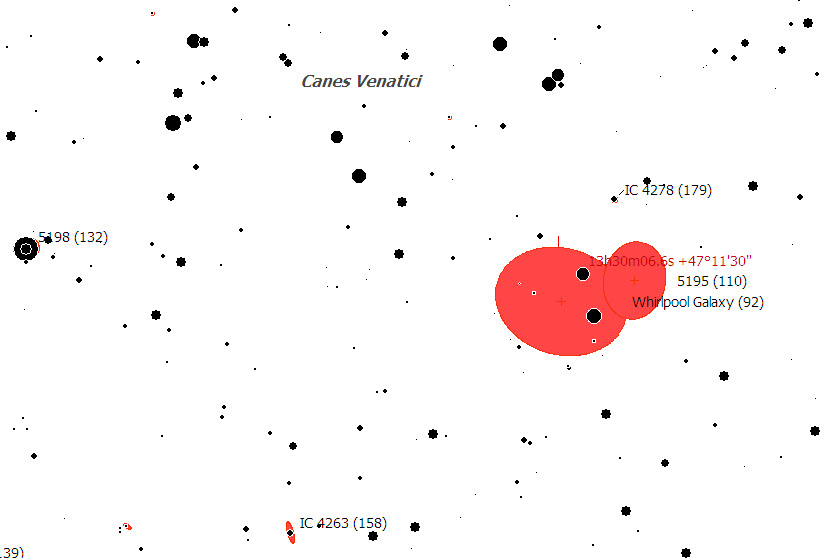
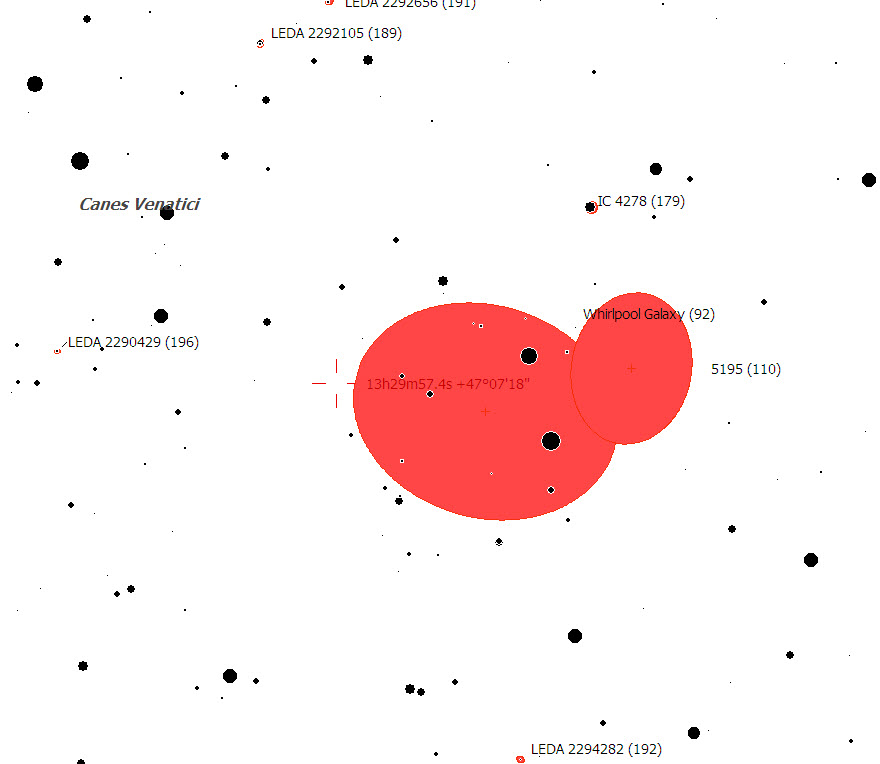
When zooming on the Full frame picture, once can see (probably with the help of the Map) various galaxies such as IC 4278 (Mag 17.4), LEDA 2292656 (Mag 18.6), and LEDA 2294282 (Mag 18.7).
Cropped picture
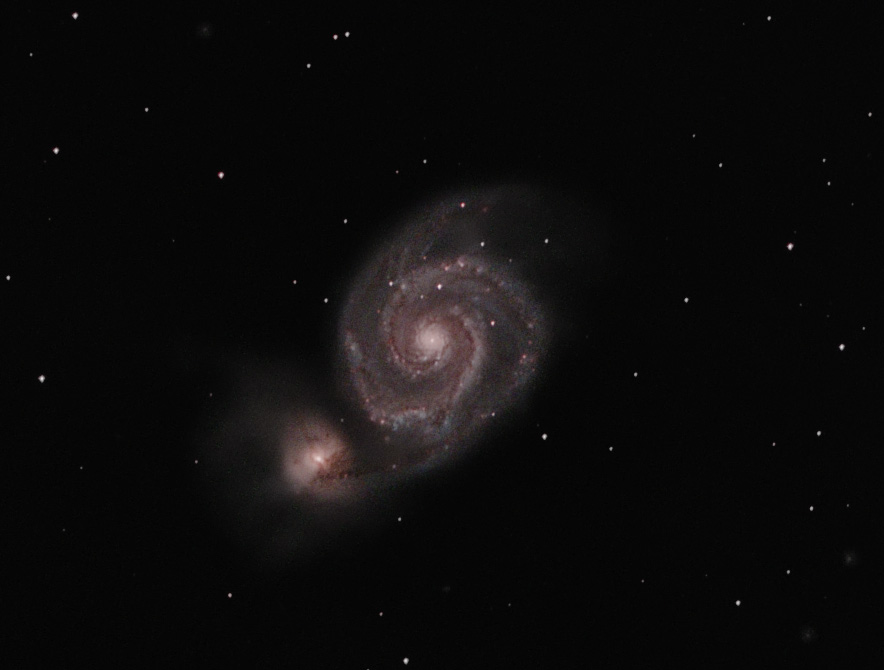
Full frame picture (click 2 times to see the full frame…)

Map of the area
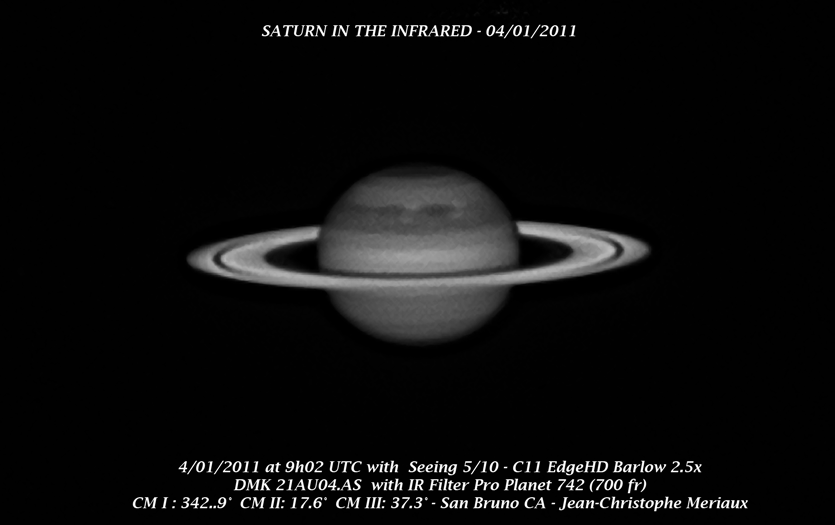
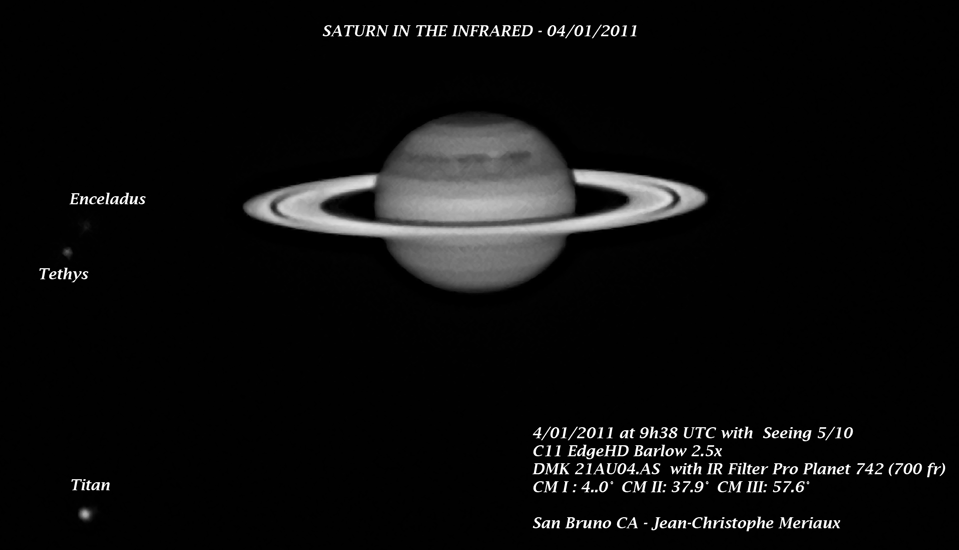
Saturn (near 2011 opposition) in the Infrared
Posted by jmeriaux in Uncategorized on April 4, 2011
Date: 04/01/2011
Location: San Bruno, California
Seeing 5/10, Transparency 3/6
These pictures were taken with my new EdgeHD 1100 (11″), a DMK back and white camera, and an infrared pass filter (Astronomik Pro Planet 742).
This infrared pass filter (transmits wavelength above 742 nanometers) not only highlight different features on the Saturn disk, but also greatly reduce the effect of bad seeing and atmospheric dispersion.
This pictures were shot 2 days before the opposition and one can notice the “Seeliger effect”, the apparent augmentation of ring’s brightness compared to Saturn’s disk at or near opposition.
Exposure time was about 6 minutes – with about 1/2 sec. for each frame.
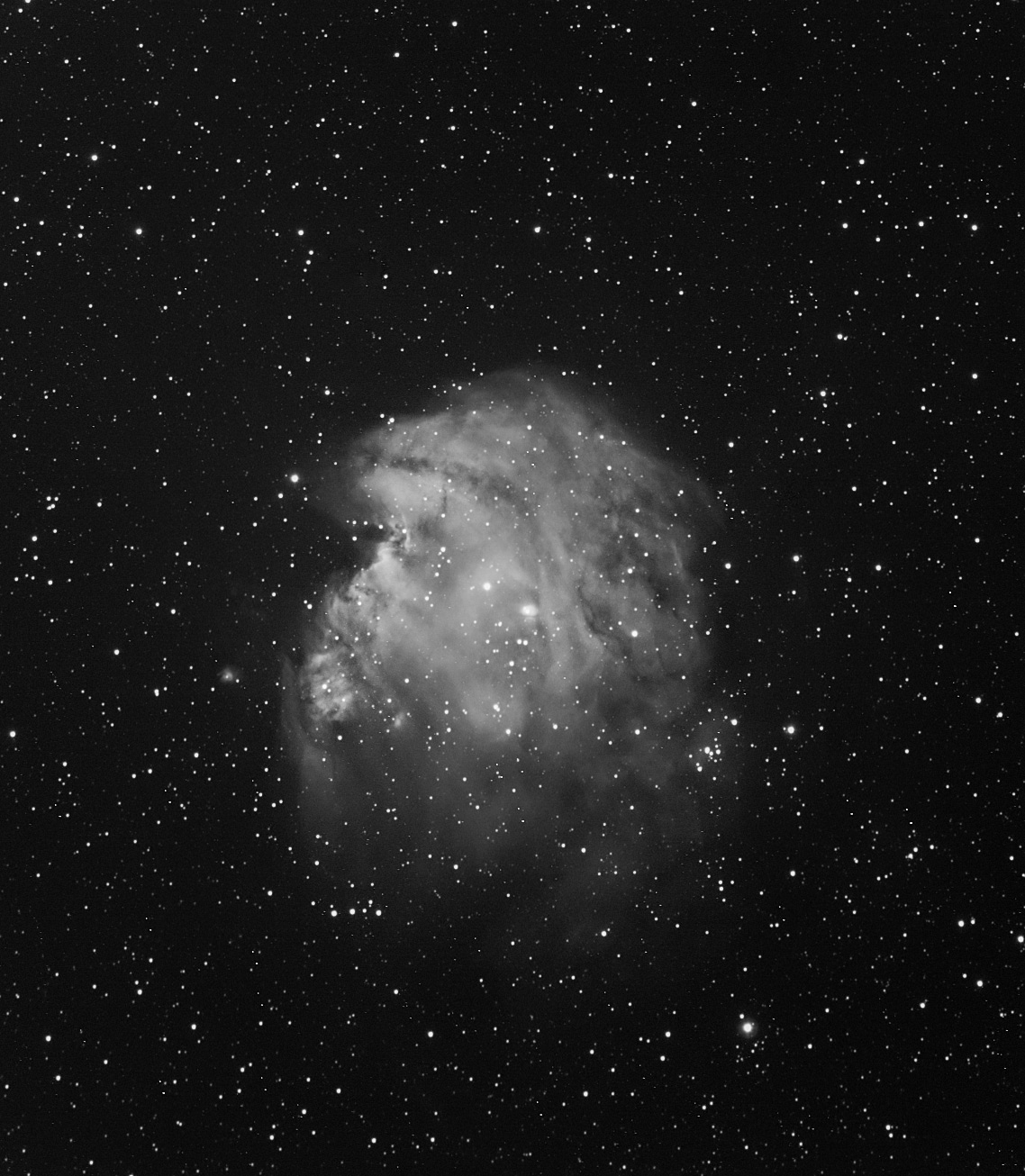
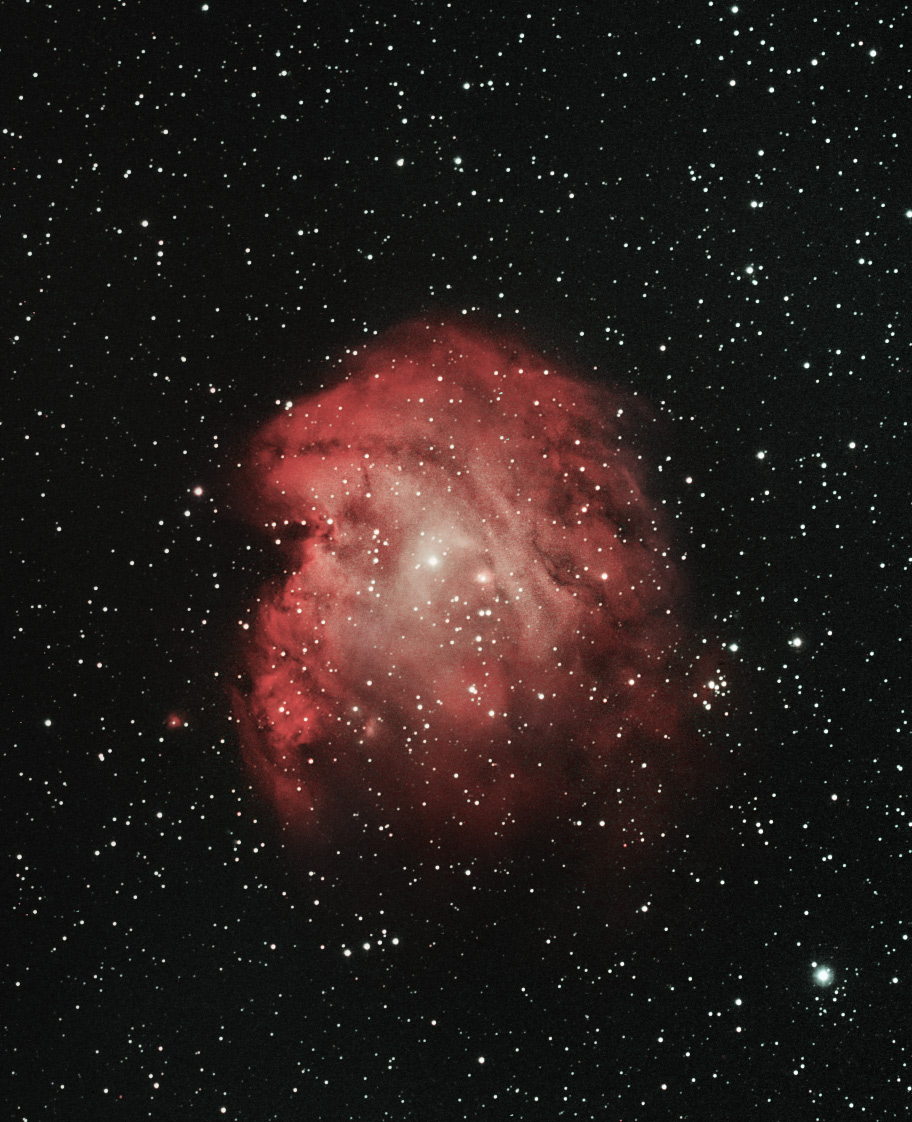
Monkey Nebula (NGC 2174) with SVR90T in Narrow band
Posted by jmeriaux in Astrophotography, Deep sky objects on March 9, 2011
Location: San Bruno, CA
Telescope: Stellarvue SVR 90T with Stellarvue Field flattener on Takahashi NJP-Z Mount
Camera: Qhy9 CCD with Astronomik H-Alpha 12nm Filter and O-III 12nm Filter
The color picture is a “HOO” Narrowband picture:
- H-Alpha: red channel – 16 exposures of 480secs.
- O-III: green and blue channel – 21 exposures of 480 secs.
On the left, the H-Alpha image, on the right the HOO composite image. Note the Monkey nebula emits mainly in H-Alpha only the central parts of the nebula glows in the OIII band.
Saturn “Serpent Storm” with Celestron EdgeHD 11″
Posted by jmeriaux in Astrophotography, Planets on March 2, 2011
Date: 2/27/2011 at 2.23am PST
Location: San Bruno California
Telescope: EdgeHD 11 with DMK 21AU04.AS Camera and Siebert Barlow 2x
Seeing: 6/10
Image Processing: Frame stacking: AVI Stack, Image composition: Photoshop CS4, Astra Image Wavelet plug-in, Noise Ninja
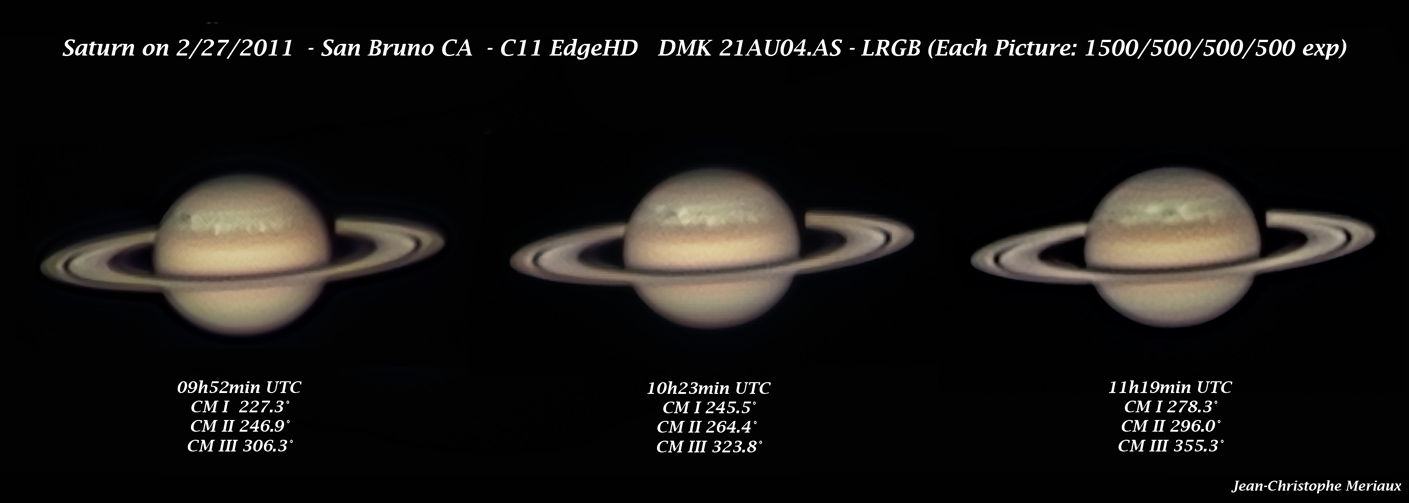
This is one of the first pictures taken with my new Celestron EdgeHD 11″. The seeing was above average – but not excellent. Visually at x450, Saturn was impressive, with a great contrast on the Cassini division, and details easily visible on the north band (the great north band disturbance famously called “serpent storm”).

The 11″ of aperture here made a huge difference with previous images taken with my Mak Cassegrain 7″, not so much in terms of pure resolution (limited by seeing) – but in terms of image brightness. I imaged at f/d 25 – I should have imaged at f/d 37 with the Mak Cassegrain to achieve the same image scale. I was able to take most of the frames at 1/10 sec. or below, to capture moments of best seeing. This is a composite image made of roughly 2,500 frames shot in about 6 minutes. Capturing Saturn’s satellites up to magnitude 12 on the luminance frame was fairly easy – even though each frame was 1/20sec of exposure for the luminance layer.
Saturn satellites from left to right:
- Dione : magnitude 10.5
- Enceladus: magnitude 11.9
- Rhea: magnitude 9.9
- Thetys: magnitude 10.4
This is a set of three images taken during this imaging session showing Saturn’s rotation…
Rosette Nebula in Narrowband with Stellarvue SVR90T
Posted by jmeriaux in Uncategorized on February 27, 2011
Location: San Bruno, CA
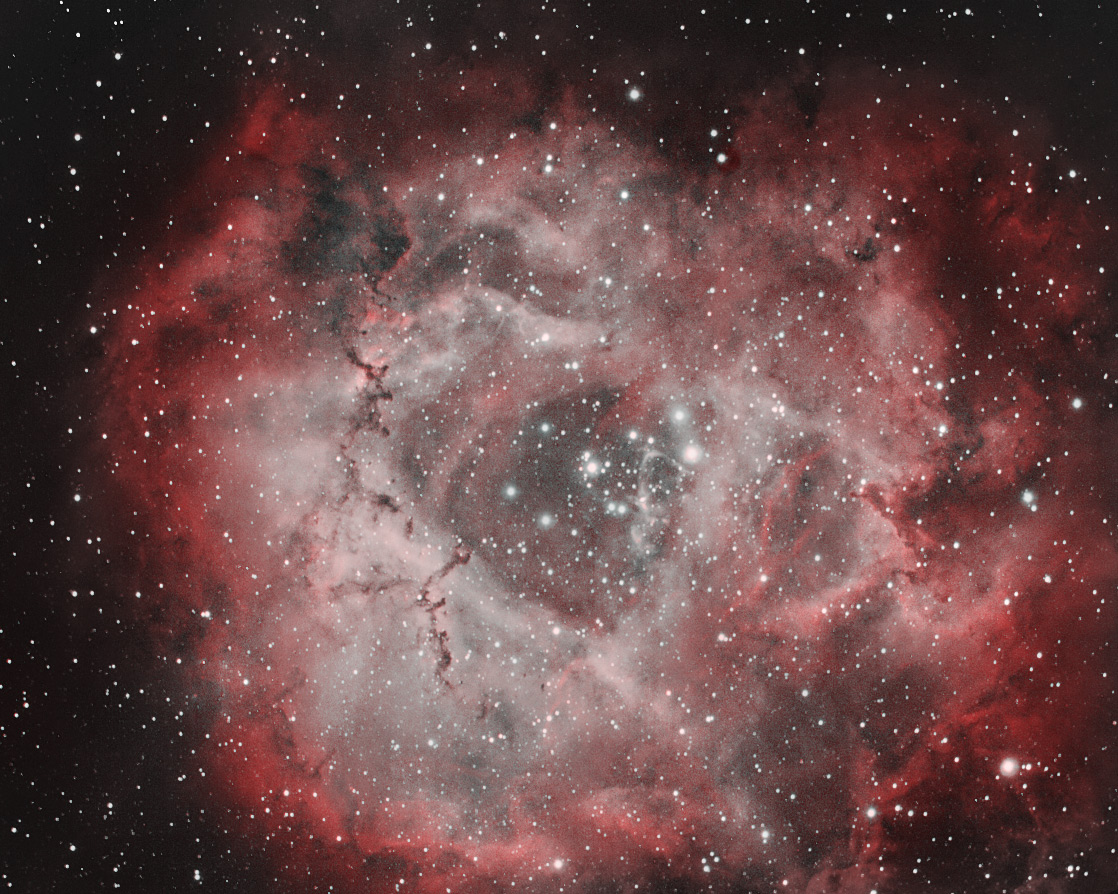
Telescope: Stellarvue SVR 90T with Televue x0.8 reducer on Takahashi NJP-Z Mount
Camera: Qhy9 CCD with Astronomik H-Alpha 12nm Filter and OIII 12nm Filter
H-Alpha: 20 exposures of 480sec on 01/22/2011
OIII: 26 exposures of 480sec on 01/21/2011
The pictures uses H-Alpha for Luminance, Red, and OIII for Green and Blue – and took a total of 6 hours of exposure. The regions rich in H-Alpha emission are red – but note the rosette nebula emits quite considerably also in the OIII band – making the central regions appearing withe.
B33 / Horse head and Medusa Nebulae with 8″ Newtonian in H-Alpha
Posted by jmeriaux in Uncategorized on February 21, 2011
Location: San Bruno, CA
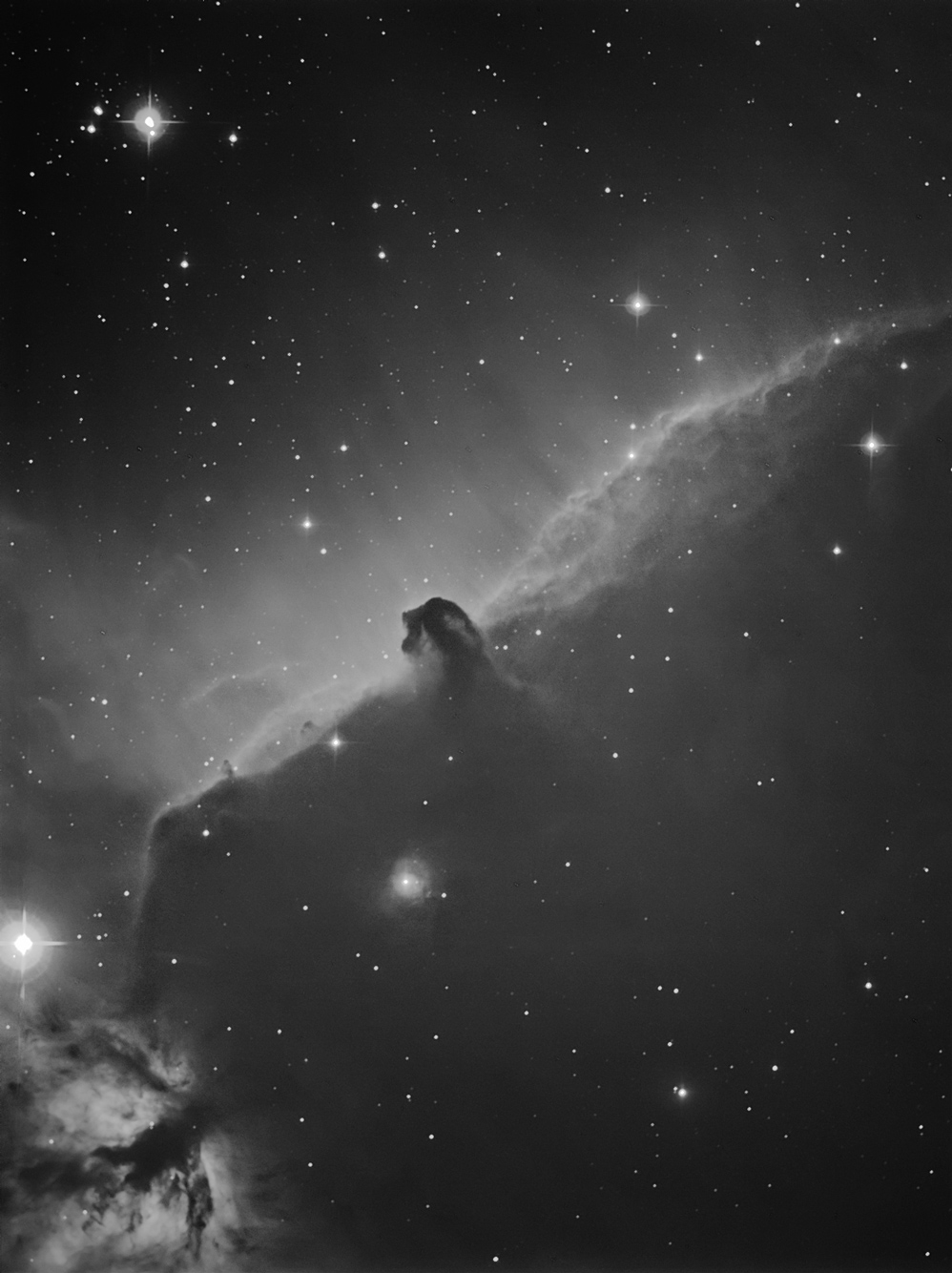
Telescope: Orion Astrograph 8″ on Takahashi NJP-Z Mount
Camera: Qhy9 CCD with Astronomik H-Alpha 12nm Filter
Another series of H-Alpha images this time with the 8″ Orion Newtonian Astrograph.
Once the telescope is well collimated, it produces good images along with the Baader MPCC coma reducer.
The B33 / Horsehead image is a composite of 14 exposures of 390 seconds, processed with Maxim DL v5 and Photoshop CS4.
B33 / Horsehead on 2/10/2011 with 8″ Newtonian telescope
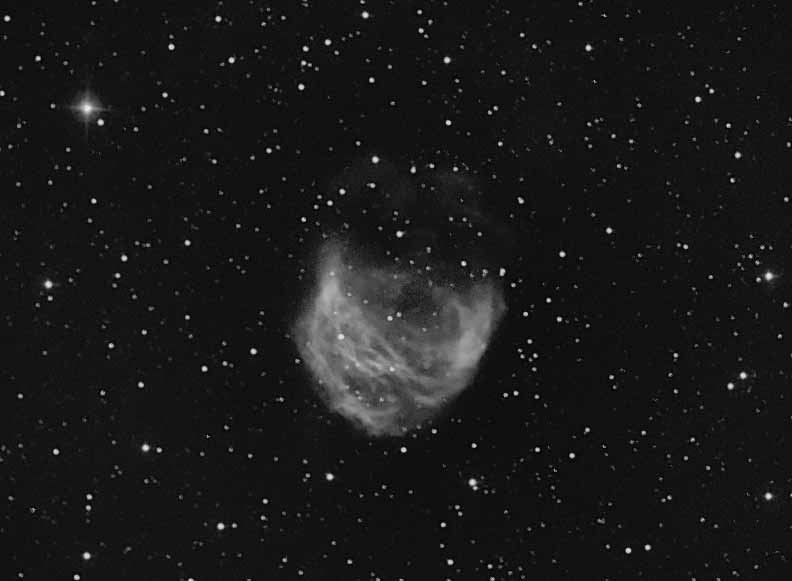
The next picture is the more challenging Medusa nebula (planetary nebula).
This nebula was discovered in 1955. It has a very low surface brightness.
The technology to record Hydrogen Alpha images became after World War II (source: galaxymap.org).
I assume this combined with the very low brightness of this nebula is one of the reason why it was discovered relatively recently.
By comparison, it is quite easy to see the shape of the Nebula with one sub-exposure of 6min done with my 8″ telescope in 390sec amidst the City light!
The image is a composite of 15 exposures of 390sec, combined with Maxim DL 5 and processed with Photoshop CS4.
Sharpless 2-274 / Medusa Nebula on 2/9/2011 with 8″ Newtonian