Archive for category Astrophotography
Solar Spots with SV 90 Raptor and Baader Solar Film
Posted by jmeriaux in Astrophotography, Sun on December 24, 2010
Date: 9/26/2010
Location: San Bruno, California
These pictures were taken with the Baader Solar Film and my DMK black and white camera.
Sun granules and faculae are featured in respectively the first and second pictures
The Stellarvue SV90 (3.5″) is a fine instrument for Sun white light Astrophotography.
It reaches temperature equilibrium quite fast – and with its great optical quality it can get as far as a 3.5″ aperture can possibly go…
In addition I used a Televue x5 Powermate. Since the SV90 has a relatively short focal ratio (f/d 7) the x5 powermate is necessary to get high resolution pictures.


Processing:
– Avistack
– Photoshop CS4
– Astraimage Wavelet filter
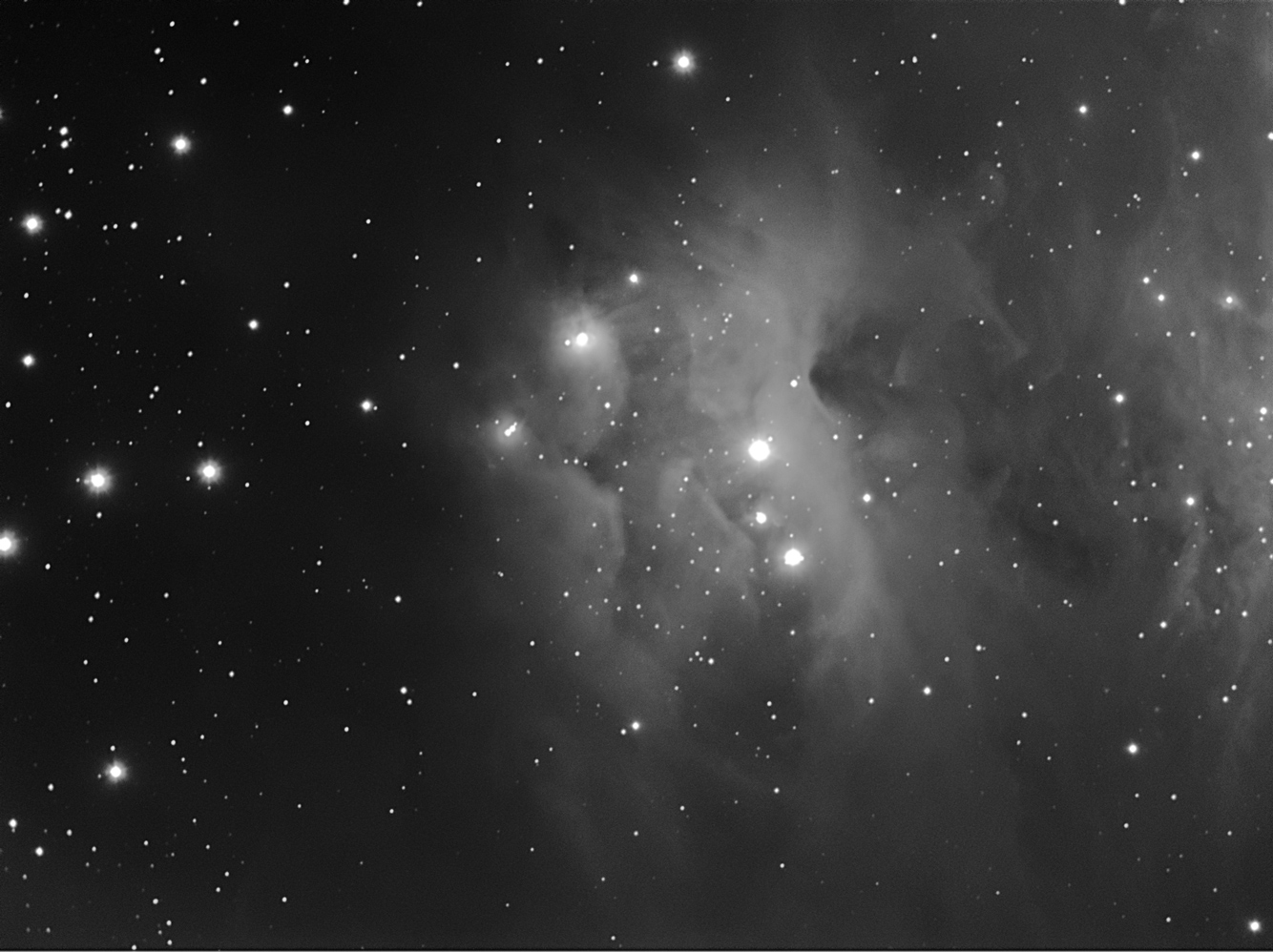
Running Man nebula with c9.25
Posted by jmeriaux in Astrophotography, Deep sky objects on December 11, 2010
Location: San Bruno, CA – 11/14/2010
C9.25 with Focal Reducer on NJP-Z Mount
Combination of 7 exposures of 7 minutes
Camera: Qhy9 at 2×2 binning with astronomik CLS CCD filter
This is my first long exposure with my new Takahashi NJP-Z mount. I am planning to do long focal / high resolution astrophotography with it and I am still in the learning curve.
The set up I have with my C9.25 and guidescope is far from optimal – and I am working on improving the overall rigidity – since I realized I am not limited by the mount (which has an excellent tracking) but rather by tube flexture (guidescope).
The mount was controlled from a Toshiba Netbook.
Processing: Maxim DL, Photoshop CS4, Sharpener Pro 3.0, Noise Ninja
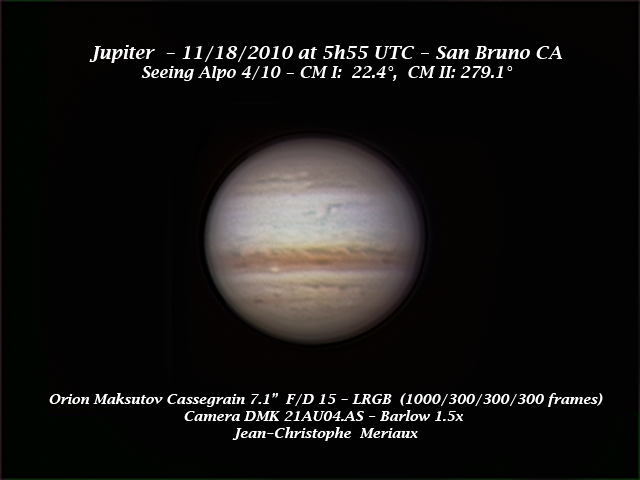
Jupiter SEB revival in November 2010
Posted by jmeriaux in Astrophotography, Planets on December 4, 2010
Orion 180 Mak Cassegrain with DMK Camera on Takahashi NJP-Z mount.
Seeing: 4/10
I captured these pictures on a night of average seeing.
It is possible to notice a quite visible revival of the South Equatorial belt on this picture, that was not visible in pictures taken earlier in November.

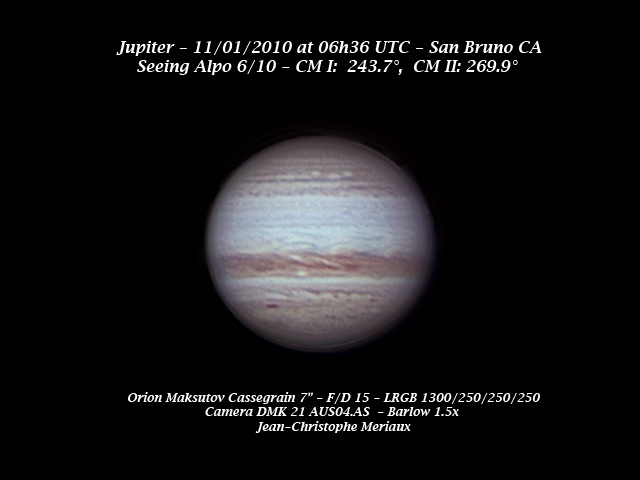
Jupiter – November 2010
Posted by jmeriaux in Astrophotography, Planets on November 4, 2010
Seeing condition was pretty good (Alpo seeing 6/10) when I took this picture with my 7″ Orion Maksutov Cassegrain.
I spent 30min collimating the telescope before shooting Jupiter. I used a quality eyepiece at x350 to get pretty symmetric diffraction rings on a 2nd magnitude star. It was I think time well spent.
This is the first time I collimated this telescope since I bought it – the scope keeps collimation pretty well – but still it was time to tweak it.
And it paid off – seeing was pretty good and with better collimation the telescope really showed its potential.
I am still very surprised by what this small telescope is capable of !
Image processing:
– Registax v5
– Photoshop CS4
– Astra Image wavelet plug in
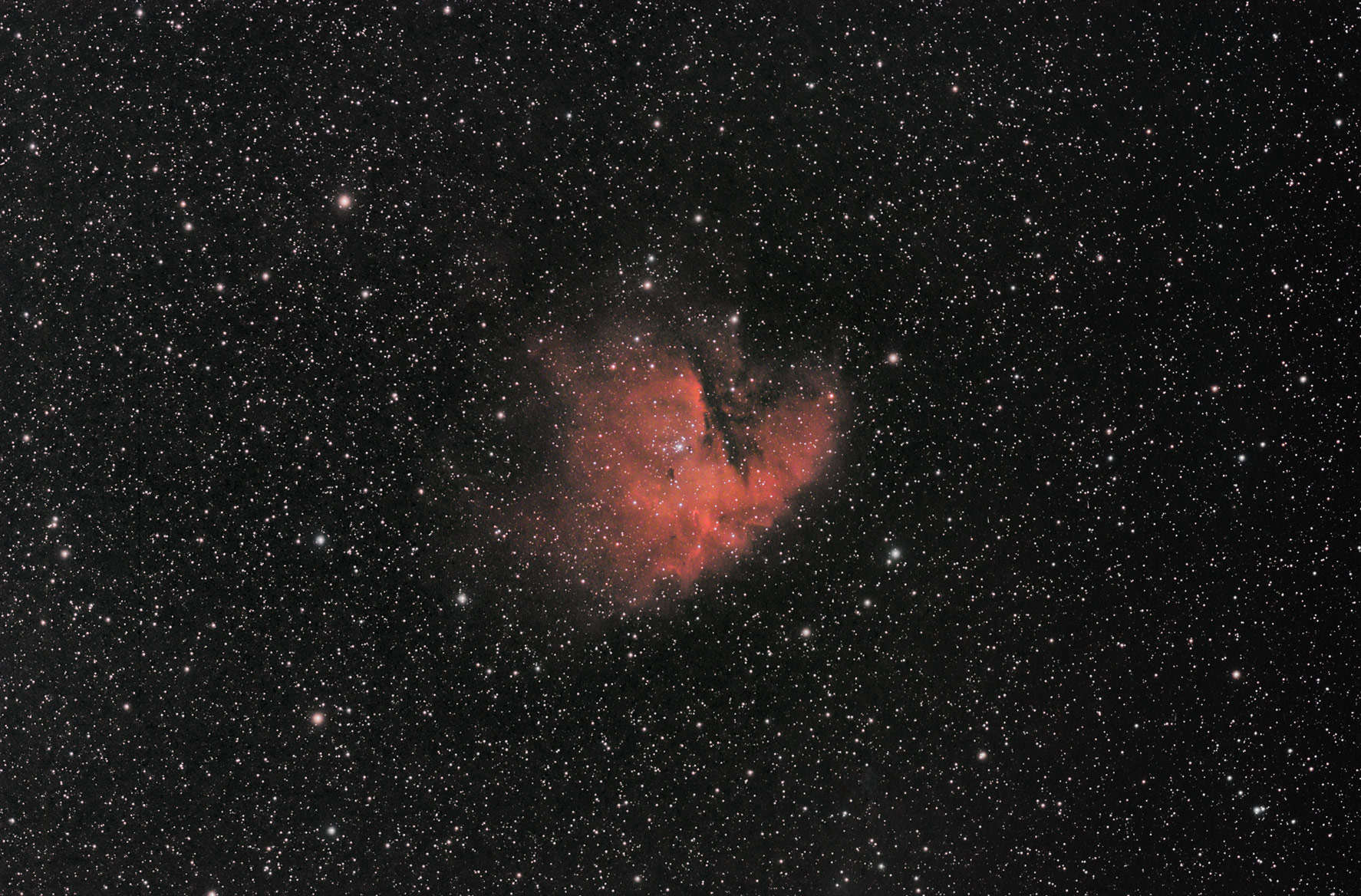
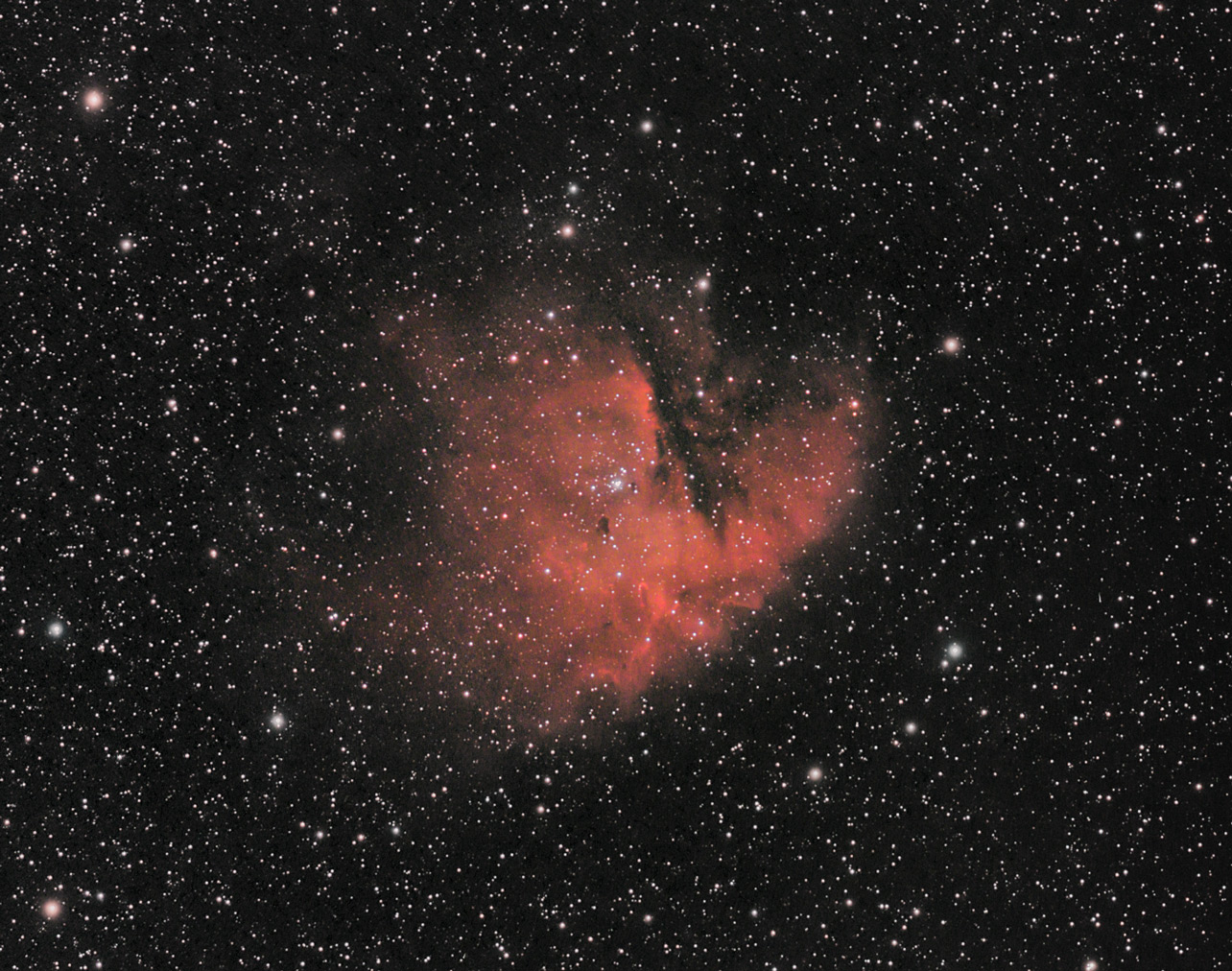
Pacman Nebula with SV90 Raptor
Posted by jmeriaux in Astrophotography, Deep sky objects on October 24, 2010
This is the first picture I took with my new Stellarvue SV90 Raptor (APO triplet).
The quality of this telescope is excellent and with its carbon fiber tube, it is very lightweight.
Star diffraction pattern is textbook-like. With the Stellarvue field flattener specially designed for the stellarvue refractors at f/d 7, stars are round and tight from center to edge.
I can see a drastic difference with the Orion 102ED I had before: even though the focal is slightly shorter, the SV90 provides much more details. This is a pleasure to image with this telescope!
Total exposure time was almost 3 hours. Having many sub-exposures in conjunction with the CLS-CCD light pollution filter is definitely a good way to improve the S/N ratio in my light polluted backyard…
Date: 10/12/210 – San Bruno, CA
Stellarvue SV90 Raptor at F/D 7 with Field flattener on Atlas Mount
Autoguiding with FS-60C and Starshoot autoguider
26 exposures of 7 minutes with Qhy8 CCD camera
Filter: Astronomik CLS CCD
Processing: MaximDL 5, Photoshop CS4 and Noise Ninja.
Full Frame
Cropped Image
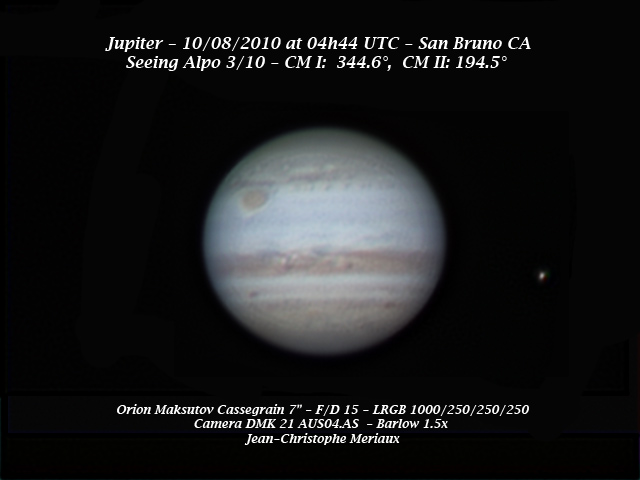
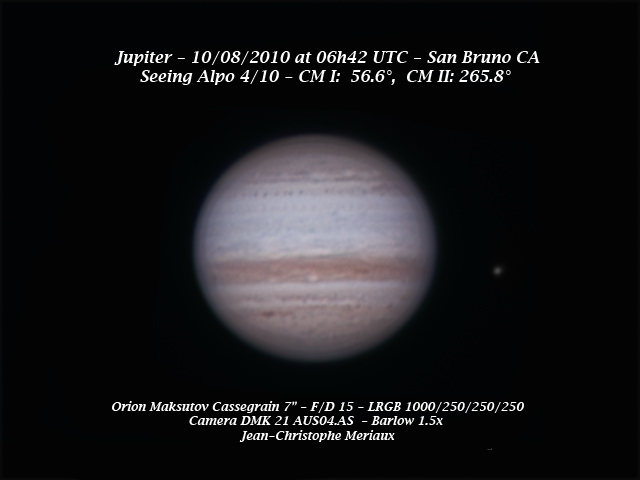
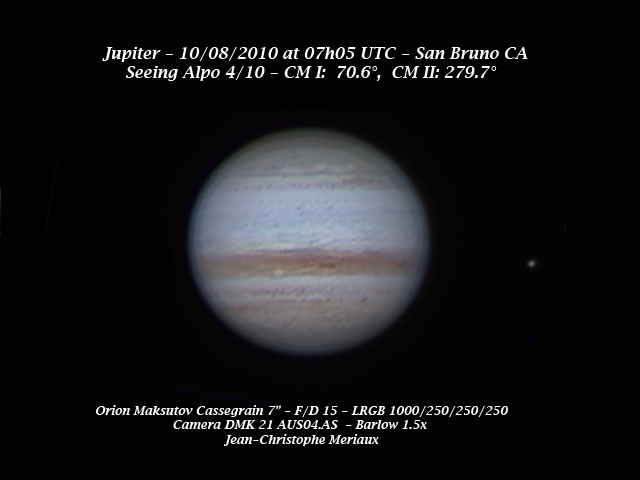
Jupiter opposition – October 2010
Posted by jmeriaux in Astrophotography, Planets on October 17, 2010
I took these shots of Jupiter with my 7″ Maksutov Cassegrain.
Seeing what good but not at the best this night. Seeing was below average first (first shot) and then turned better progressively at the same time Jupiter raised in the Sky.
However the LRGB technique I have been using lately allows to have quite good resolution planetary imaging with average seeing, by extracting the best frames out of the large frame number / high speed luminance AVI.
For the first time I used the Astra Image photoshop plug in for deconvolution (maximum entropy deconvolution) and wavelet sharpening. I got this time better results compared to the deconvolution software “Focus Magic” I have been using so far.
I would recommend this software for planetary image processing.
New Mexico Sky: M31 and M33 with Astrotrac
Posted by jmeriaux in Astrophotography, Wide Field and Telephoto on September 28, 2010
Another post on my 2 week escape to clear skies – Abiquiu, NM … I probably produced as many pictures in two weeks as in 6 months in the San Francisco Bay Area! Another aspect of doing Astrophotography in a Urban environment is that you need to go out very far to access clear skies.. And the Astrotrac travel system helped there – I was able to easily carry the equipment on my flight to New Mexico!
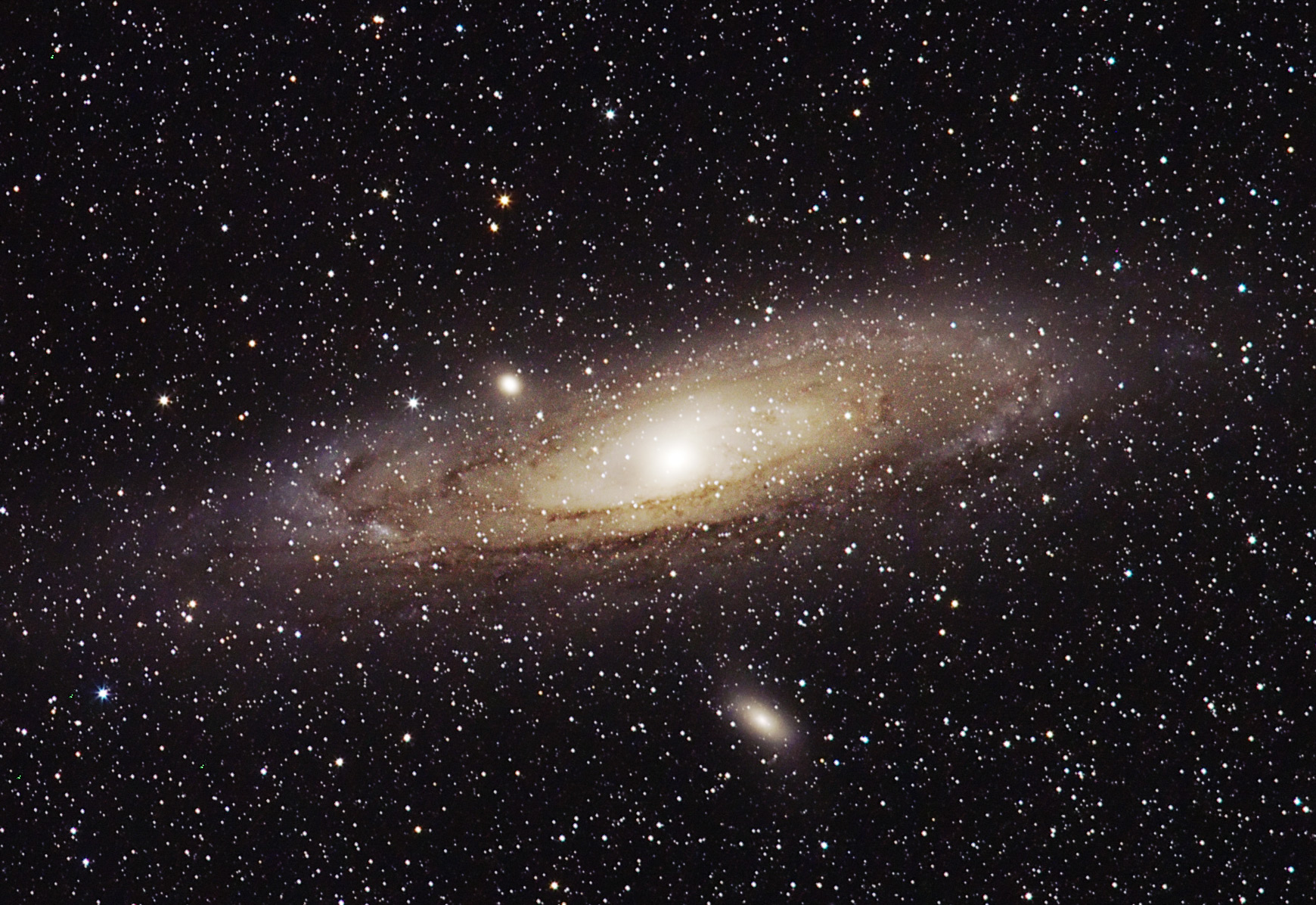
I captured these two great galaxies with two different cameras: A modified Canon XTi for m31, and a Qhy8 CCD for m33, both cameras using my Canon 200mm L lens and the astrotrac travel system. Note the Qhy8 has the same sensor as the Orion Starshoot Pro V2 ( Sony ICX413AQ).
M31 with Canon XTi and Canon 200mm L
This is a cropped picture. It is a combination of 13 frames of 3 minutes at f/d 3.5.
Stars on the image are round till the edge (on the uncropped images) which is a sign of perfect focus (with my Canon 200mm L lens).
M33 with Qhy8 and Canon 200mm Lens
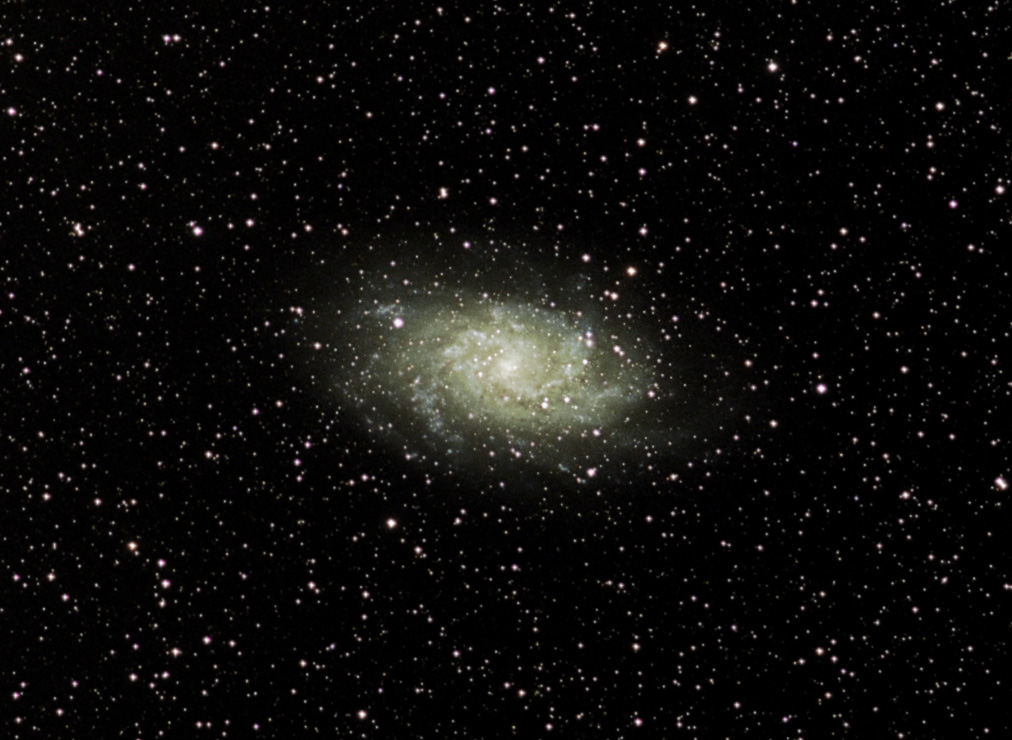
This is a cropped picture.
This is a combination of 19 frames of 3 minutes at f/d 2.8, taken with the Qhy8 CCD Camera.
Comparison between the Canon XTi and Qhy8 for Wide Field imaging: my personal opinion
Having taken a couple of pictures with the Canon XTi and Qhy8 CCD using the same lens (Canon 200mm) I’d like at this stage to do a comparison between the two approaches.
This comparison assumes the CCD or Canon are used with Teleobjectives (not a telescope), and the CCD is a color one, not a black and white …
Mobility: Advantage to the Canon XTi … Non need to plug to a power cord, no power converter… Which is really in the philosophy of the Astrotrac
Filter use: Advantage to the Canon … You can use clip filters in front of the sensor (HAlpha, Anti-pollution – Astronomik) – I cannot see how to use Filters with the CCD given the back focus. The Filter has to be in front of the objective, which is (more) expensive and cumbersome.
Sensitivity and Signal to noise ratio: Advantage to the Qhy8 on a couple of points
- a) On Red/HAlpha better sensitivity (even though the Modified Canon should be very close).
- b) Larger chip pixel size on the Qhy8 which leads to better overall sensitivity (7.8 microns for the Qhy8, and about 6 for the Canon XTi)
- c) Better Signal to noise ratio with CCD Cooling (for the Qhy8 chip which is already a very low noise one even without cooling)
For faint emission nebula there is an advantage with the CCD – for Galaxy / Reflection nebula I think the difference is minimal (as the pictures above show it).
Integration with Lens: Advantage to the Canon – I did not find a way to control the f/d ratio when the Canon Teleobjective is not connected to the Canon Body. With the CCD I had to use the Lens at F/D 2.8. It is not a big deal if the lens is excellent – but it is a problem if you need to stop the aperture. You have to use a mask in front of the lens in this case.
Focus: great live focus support with the Qhy8 and software shipped with the CCD. I don’t have the latest Canon body with the “Live view” function – but the CCD software is really designed for a very precise live focus and display in real time of the Full Width Half Maximum (FWHM).
Versatility: Advantage to the Canon XTi – I can (and did) use my modified canon for daylight pictures. which is another way to travel light: one camera for everything!
Ease of Use: Advantage to the Canon XTi. However the Qhy8 CCD – as many Color CCD cameras – is quite simple to operate (vs. Back and White ones with filter wheels).
As a summary, for Wide Field Astrophotography with Teleobjectives and the Astrotrac: I don’t think the kind of pictures you do with a color CCD camera such the Qhy8 are drastically better compared with a modified Canon XTi (not modified is another story). Given the versatility of the Canon DSLR body I think it is still a good choice for Wide field Astrophotography – if a choice has to be made between a CCD and a DSLR camera.
This said if you already have a CCD camera similar to the Qhy8 (as I do) – then using it can be a tool of choice for wide fields that include faint emission nebulae (e.g. in Cygnus). The overall sensitivity is I think better compared with the Canon XTi sensor (without any doubt for a non modified DSLR), and as a bonus it allows a very precise control of the focus. As an illustration, I took this picture of Ngc 7000 with the Qhy8 CCD …
 Astrophotography in Urban Environment