jmeriaux
This user hasn't shared any biographical information
Homepage: http://ngc1976.org
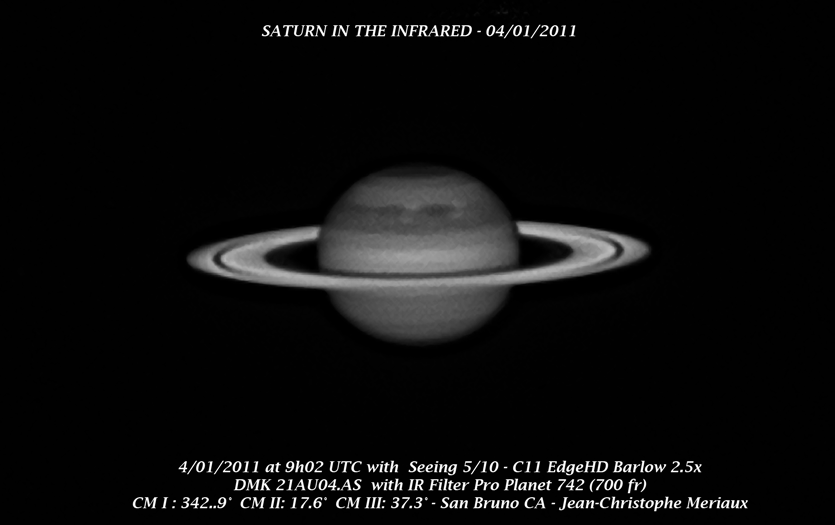
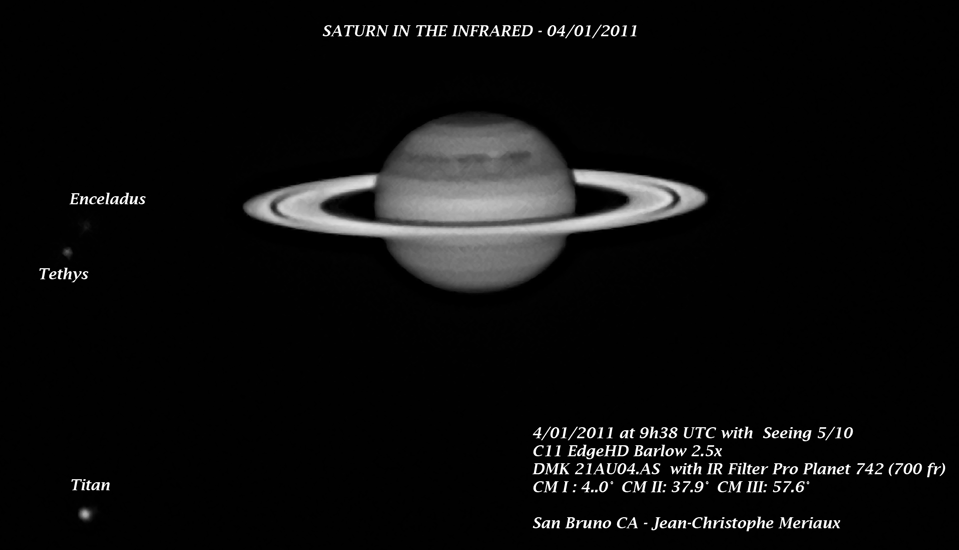
Saturn (near 2011 opposition) in the Infrared
Posted in Uncategorized on April 4, 2011
Date: 04/01/2011
Location: San Bruno, California
Seeing 5/10, Transparency 3/6
These pictures were taken with my new EdgeHD 1100 (11″), a DMK back and white camera, and an infrared pass filter (Astronomik Pro Planet 742).
This infrared pass filter (transmits wavelength above 742 nanometers) not only highlight different features on the Saturn disk, but also greatly reduce the effect of bad seeing and atmospheric dispersion.
This pictures were shot 2 days before the opposition and one can notice the “Seeliger effect”, the apparent augmentation of ring’s brightness compared to Saturn’s disk at or near opposition.
Exposure time was about 6 minutes – with about 1/2 sec. for each frame.
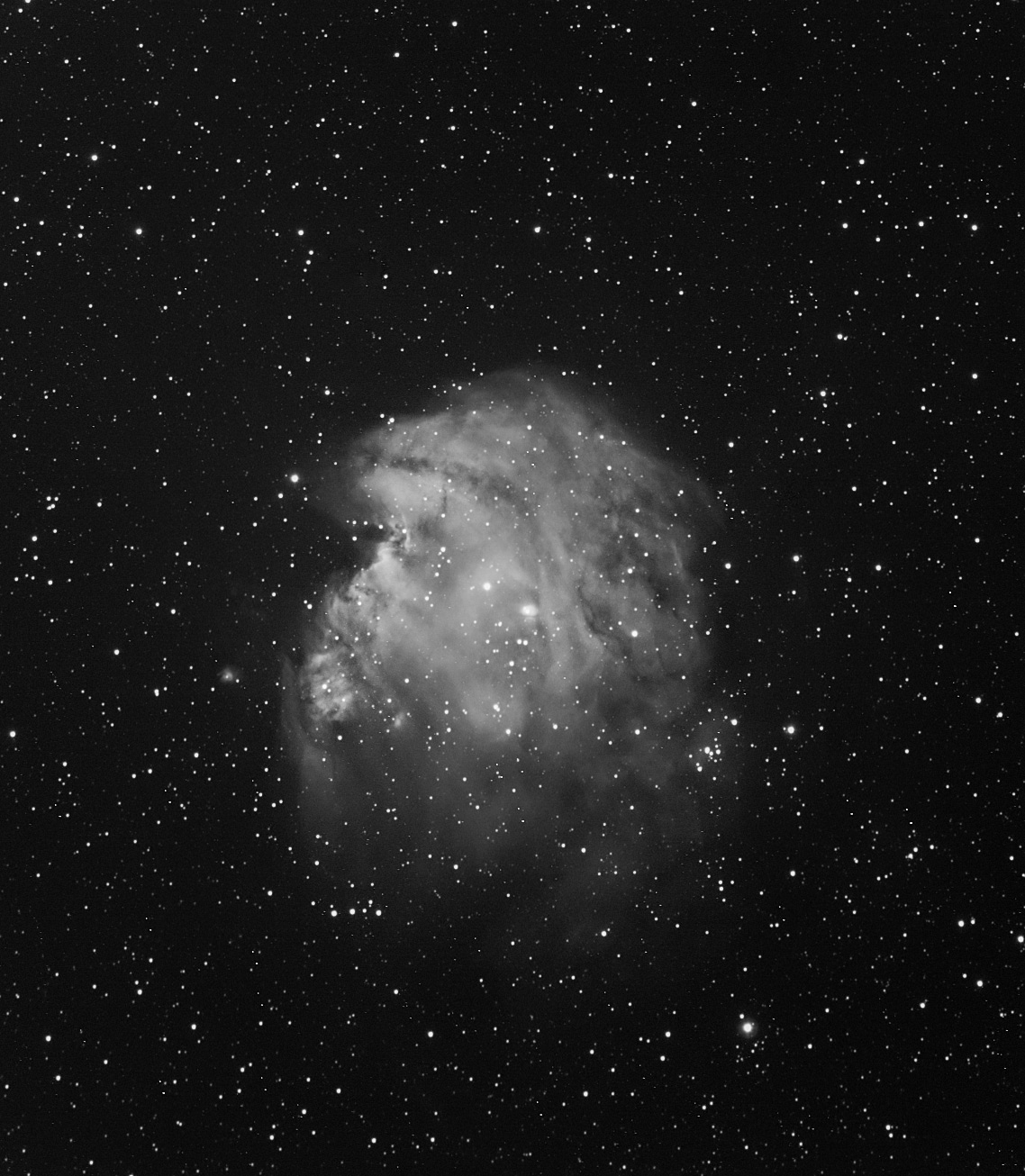
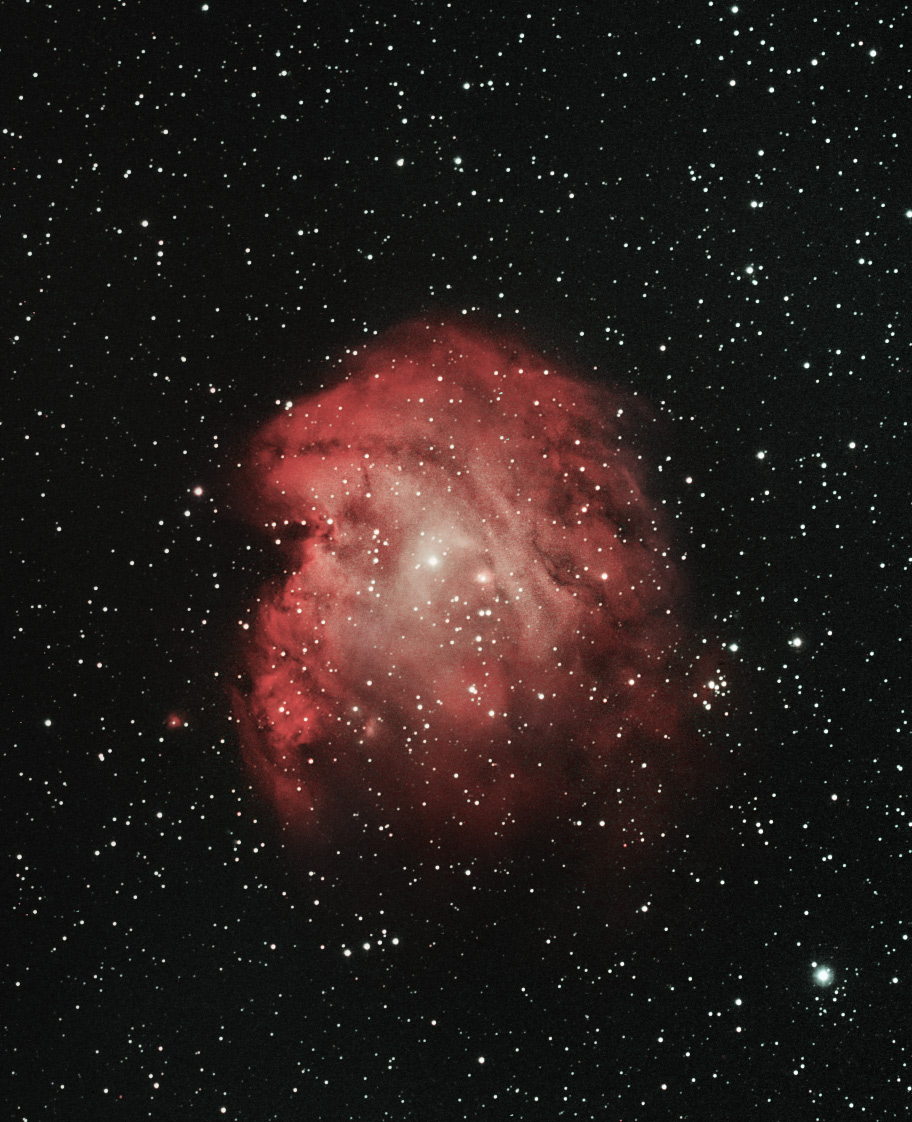
Monkey Nebula (NGC 2174) with SVR90T in Narrow band
Posted in Astrophotography, Deep sky objects on March 9, 2011
Location: San Bruno, CA
Telescope: Stellarvue SVR 90T with Stellarvue Field flattener on Takahashi NJP-Z Mount
Camera: Qhy9 CCD with Astronomik H-Alpha 12nm Filter and O-III 12nm Filter
The color picture is a “HOO” Narrowband picture:
- H-Alpha: red channel – 16 exposures of 480secs.
- O-III: green and blue channel – 21 exposures of 480 secs.
On the left, the H-Alpha image, on the right the HOO composite image. Note the Monkey nebula emits mainly in H-Alpha only the central parts of the nebula glows in the OIII band.
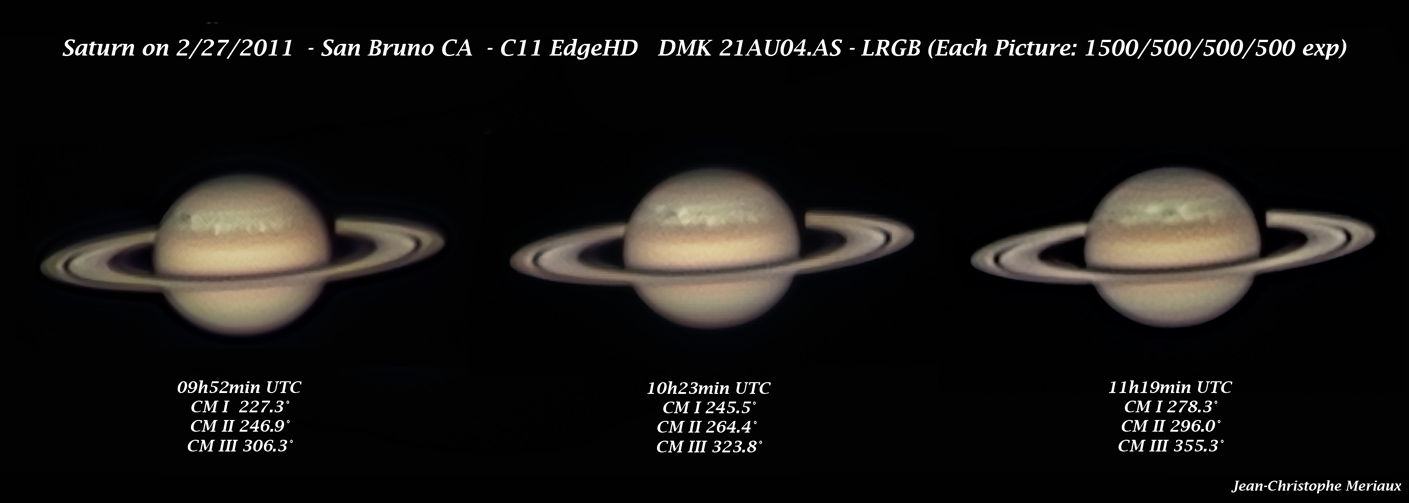
Saturn “Serpent Storm” with Celestron EdgeHD 11″
Posted in Astrophotography, Planets on March 2, 2011
Date: 2/27/2011 at 2.23am PST
Location: San Bruno California
Telescope: EdgeHD 11 with DMK 21AU04.AS Camera and Siebert Barlow 2x
Seeing: 6/10
Image Processing: Frame stacking: AVI Stack, Image composition: Photoshop CS4, Astra Image Wavelet plug-in, Noise Ninja
This is one of the first pictures taken with my new Celestron EdgeHD 11″. The seeing was above average – but not excellent. Visually at x450, Saturn was impressive, with a great contrast on the Cassini division, and details easily visible on the north band (the great north band disturbance famously called “serpent storm”).

The 11″ of aperture here made a huge difference with previous images taken with my Mak Cassegrain 7″, not so much in terms of pure resolution (limited by seeing) – but in terms of image brightness. I imaged at f/d 25 – I should have imaged at f/d 37 with the Mak Cassegrain to achieve the same image scale. I was able to take most of the frames at 1/10 sec. or below, to capture moments of best seeing. This is a composite image made of roughly 2,500 frames shot in about 6 minutes. Capturing Saturn’s satellites up to magnitude 12 on the luminance frame was fairly easy – even though each frame was 1/20sec of exposure for the luminance layer.
Saturn satellites from left to right:
- Dione : magnitude 10.5
- Enceladus: magnitude 11.9
- Rhea: magnitude 9.9
- Thetys: magnitude 10.4
This is a set of three images taken during this imaging session showing Saturn’s rotation…
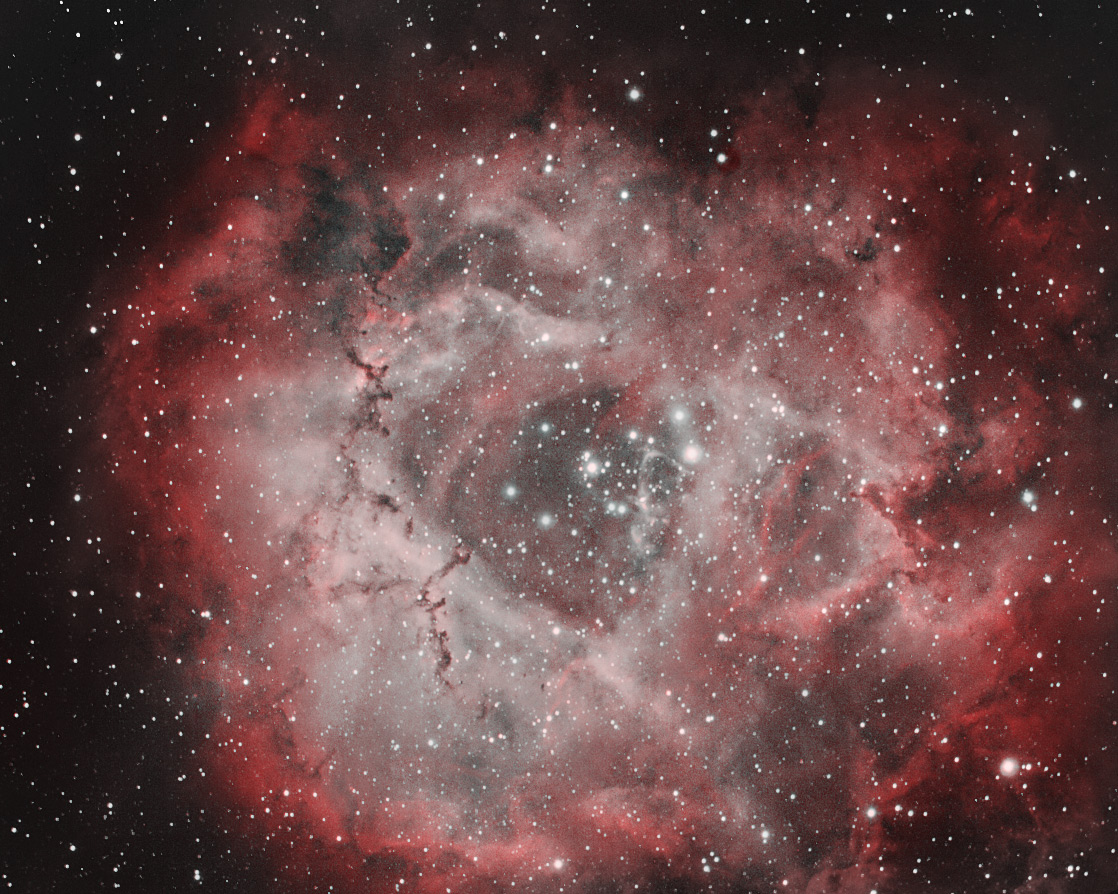
Rosette Nebula in Narrowband with Stellarvue SVR90T
Posted in Uncategorized on February 27, 2011
Location: San Bruno, CA
Telescope: Stellarvue SVR 90T with Televue x0.8 reducer on Takahashi NJP-Z Mount
Camera: Qhy9 CCD with Astronomik H-Alpha 12nm Filter and OIII 12nm Filter
H-Alpha: 20 exposures of 480sec on 01/22/2011
OIII: 26 exposures of 480sec on 01/21/2011
The pictures uses H-Alpha for Luminance, Red, and OIII for Green and Blue – and took a total of 6 hours of exposure. The regions rich in H-Alpha emission are red – but note the rosette nebula emits quite considerably also in the OIII band – making the central regions appearing withe.
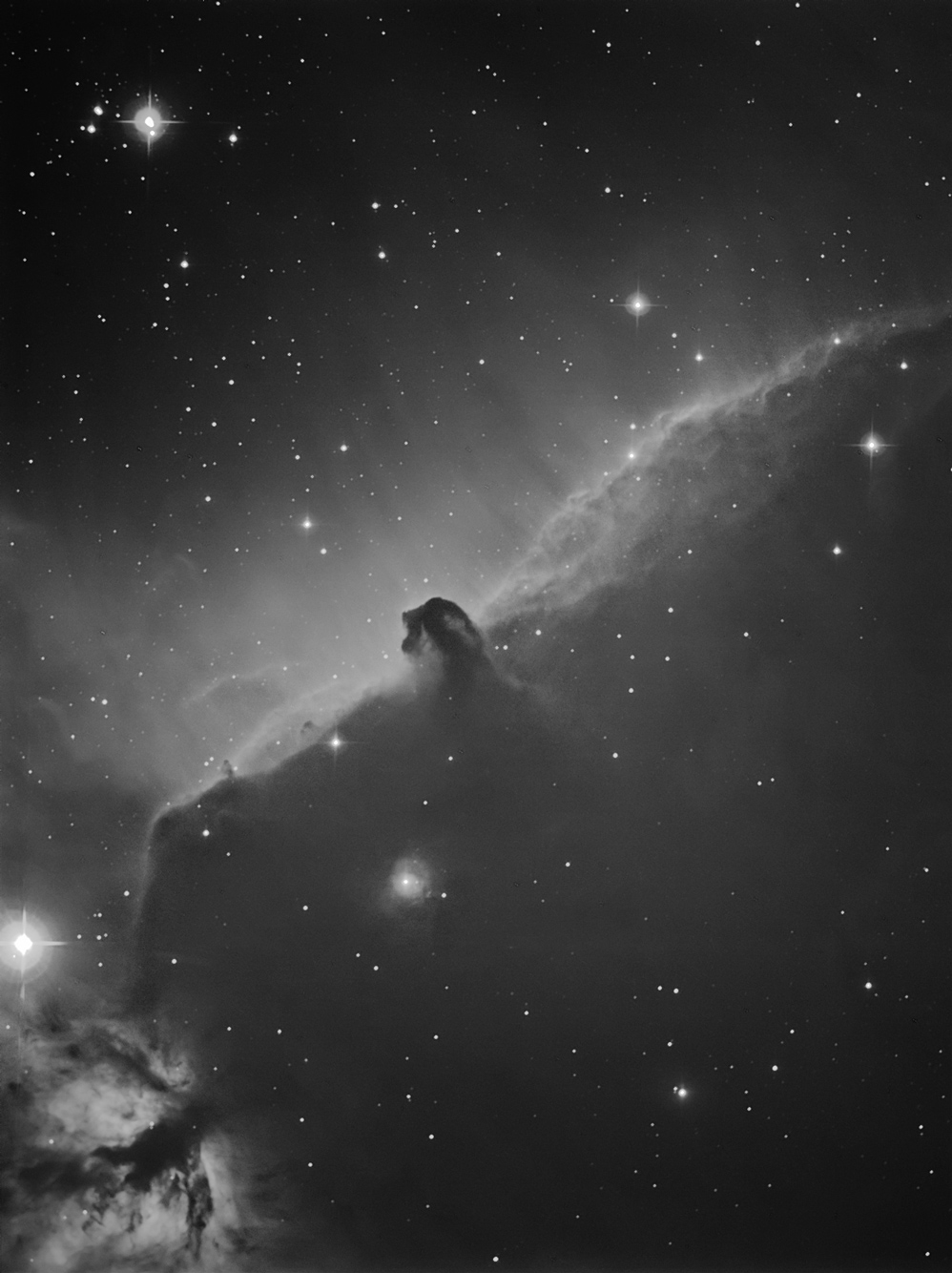
B33 / Horse head and Medusa Nebulae with 8″ Newtonian in H-Alpha
Posted in Uncategorized on February 21, 2011
Location: San Bruno, CA
Telescope: Orion Astrograph 8″ on Takahashi NJP-Z Mount
Camera: Qhy9 CCD with Astronomik H-Alpha 12nm Filter
Another series of H-Alpha images this time with the 8″ Orion Newtonian Astrograph.
Once the telescope is well collimated, it produces good images along with the Baader MPCC coma reducer.
The B33 / Horsehead image is a composite of 14 exposures of 390 seconds, processed with Maxim DL v5 and Photoshop CS4.
B33 / Horsehead on 2/10/2011 with 8″ Newtonian telescope
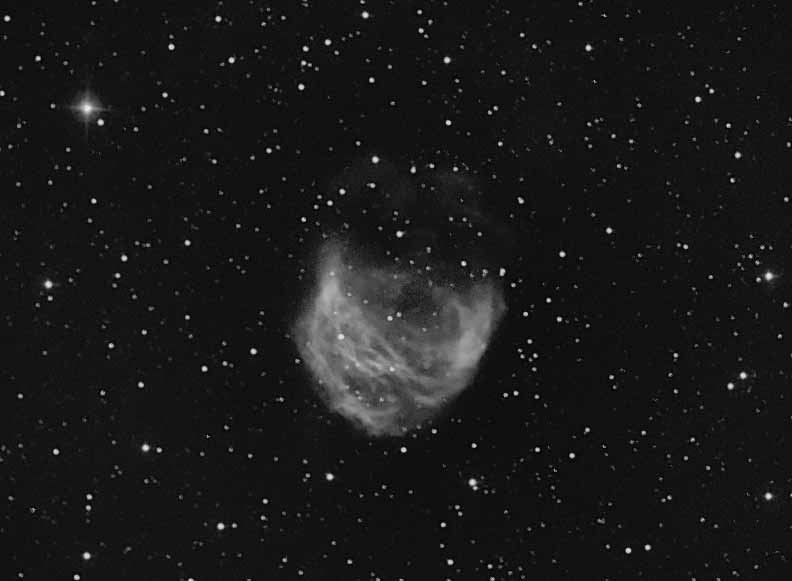
The next picture is the more challenging Medusa nebula (planetary nebula).
This nebula was discovered in 1955. It has a very low surface brightness.
The technology to record Hydrogen Alpha images became after World War II (source: galaxymap.org).
I assume this combined with the very low brightness of this nebula is one of the reason why it was discovered relatively recently.
By comparison, it is quite easy to see the shape of the Nebula with one sub-exposure of 6min done with my 8″ telescope in 390sec amidst the City light!
The image is a composite of 15 exposures of 390sec, combined with Maxim DL 5 and processed with Photoshop CS4.
Sharpless 2-274 / Medusa Nebula on 2/9/2011 with 8″ Newtonian
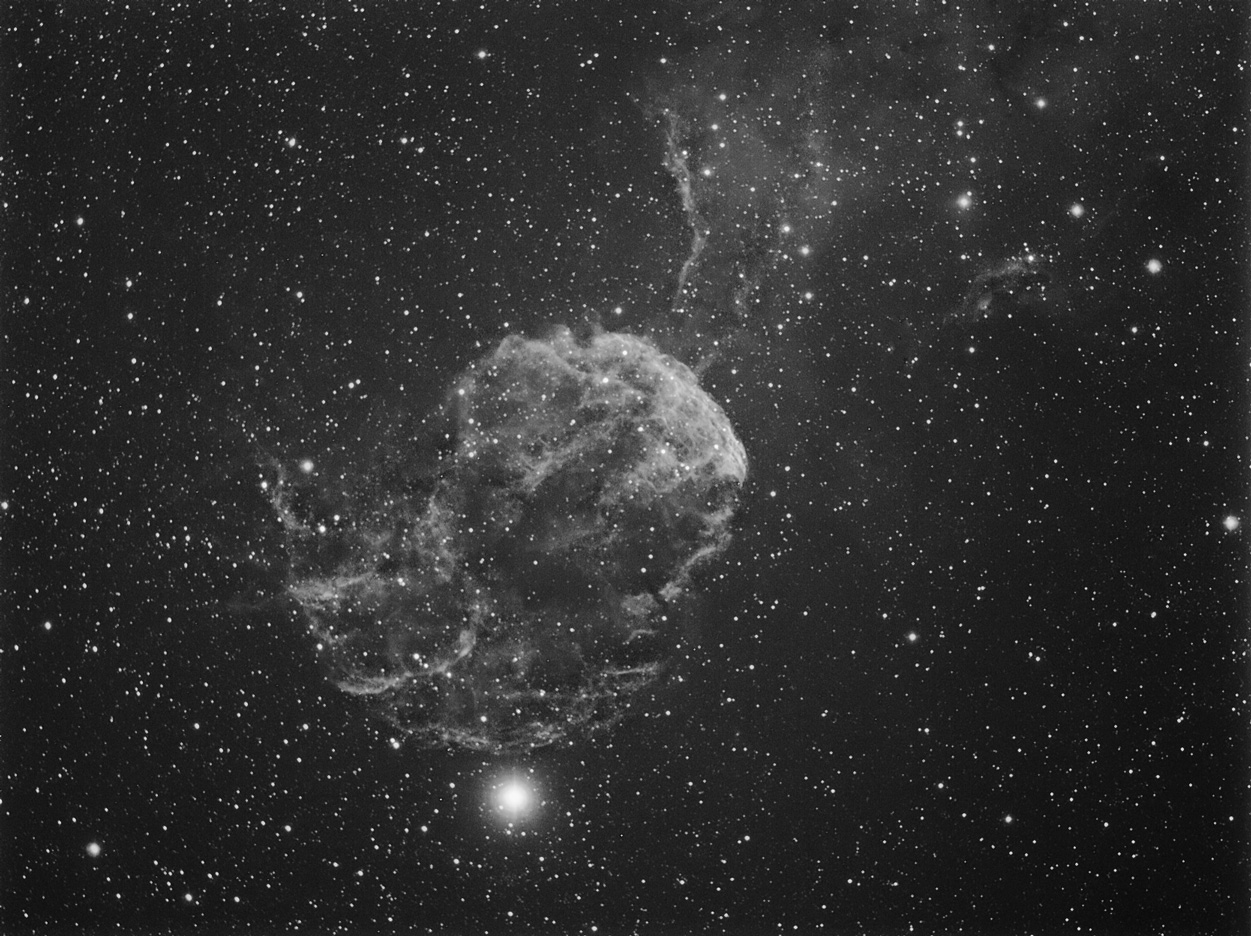
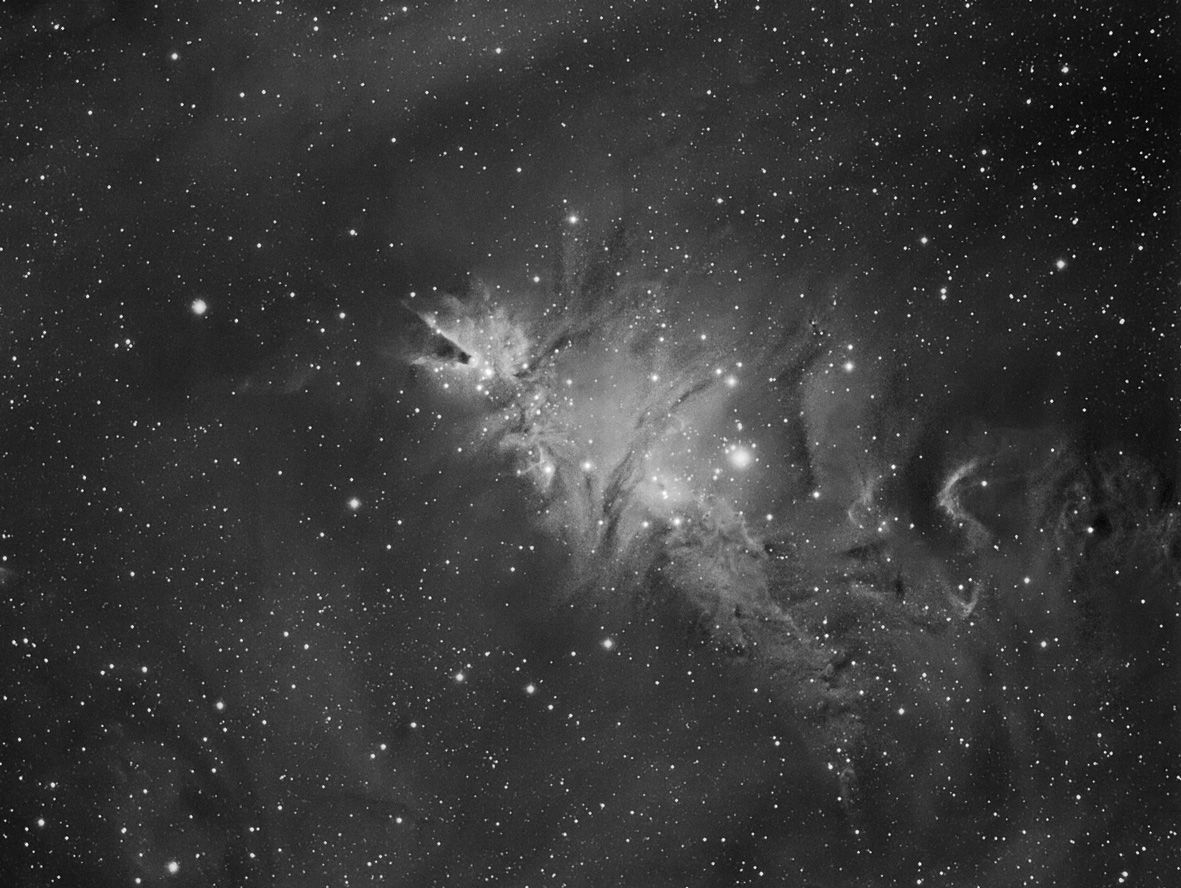
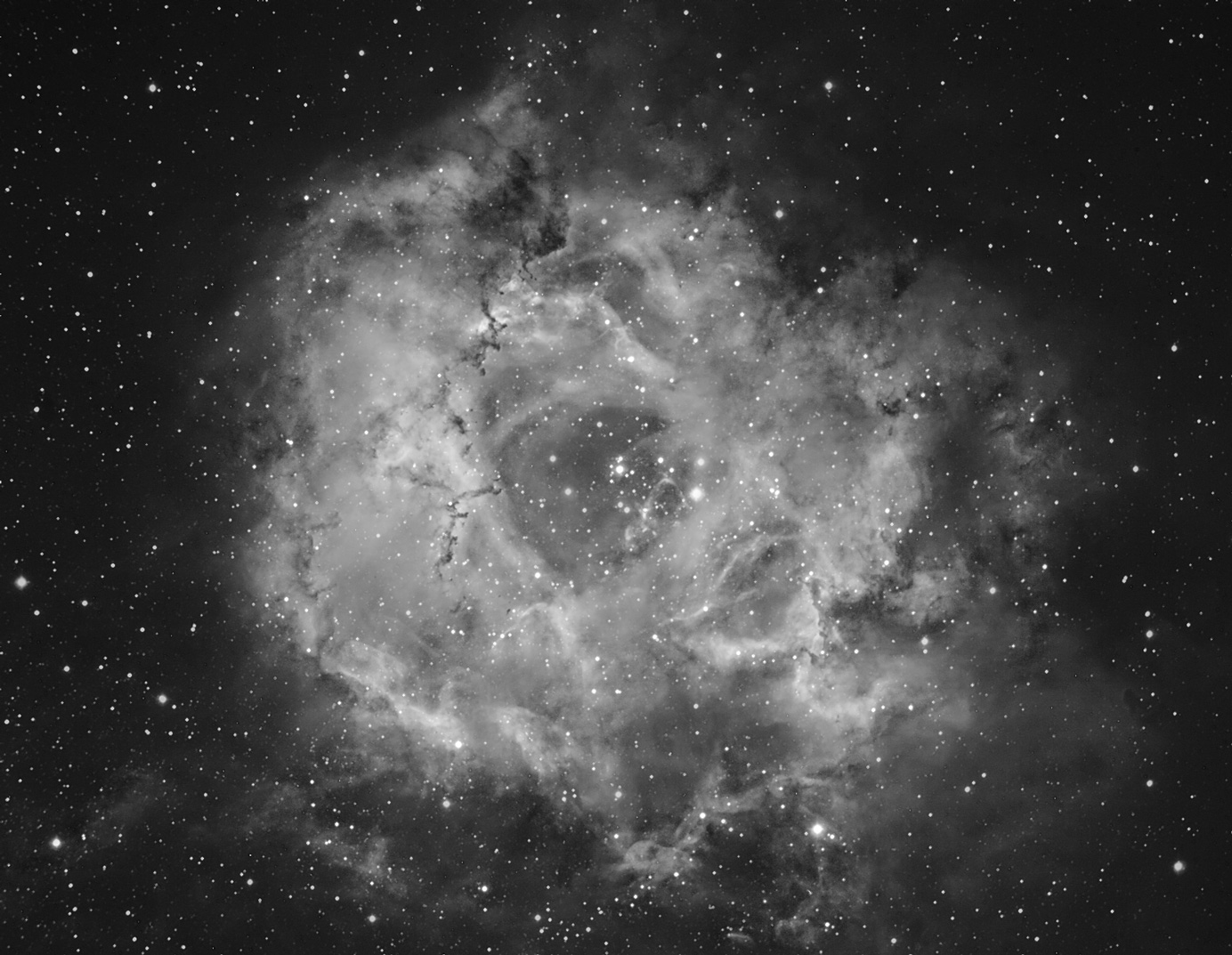
Jellyfish, Cone and Rosette Nebulae in H-Alpha with SVR90T
Posted in Astrophotography, Deep sky objects on February 10, 2011
Location: San Bruno, CA
Telescope: Stellarvue SVR 90T with Televue x0.8 reducer on Takahashi NJP-Z Mount
Camera: Qhy9 CCD with Astronomik H-Alpha 12nm Filter
Even with the short focal ratio (f/d 5.6) obtained with the televue reducer, I had to apply 2×2 Binning and take a fair amount of exposure to get details in the Nebulae.
The H-Alpha filter does wonder to combat light pollution, even though the FWHM of this filter is not very narrow (12 nanometers).
Some words about the combination of Stellarvue SV 90T and televue reducer. I had to find the best distance between the CCD chip and the reducer / flattener. Initial trials with a distance of 58mm were not successful. Then 55mm of distance between the CCD chip and reducer/flattener seemed to yield better results.
My tests were done with the Qhy9 having a relatively small sensor (15mm x 19.7mm) – and even with this sensor size stars were not perfectly round on the egdge.
That’s why I am not sure if the televue 0.8x reducer/flattener is a good match with the Stellarvue SV90T for large chips. But at least in my case it turned out fine. On the other hand, the Stellarvue flattener gives perfect flat images with round star till the edge with an APS-C size sensor … but … the F/D is still at 7, making it more difficult to image faint extended objects. That is why I opted for the Televue reducer for this set of images, even though it does not produce a perfect flat field with this telescope optics.
Jellyfish Nebula (IC 443 or Sharpless 2-254) – 01/28/2011
Cone Nebula / Christmas Tree Cluster (Sharpless 2-273, Ngc 2264) – 01/28/2011
Rosette Nebula (Caldwell 49, Sharpless 2-275) – 01/22/2011
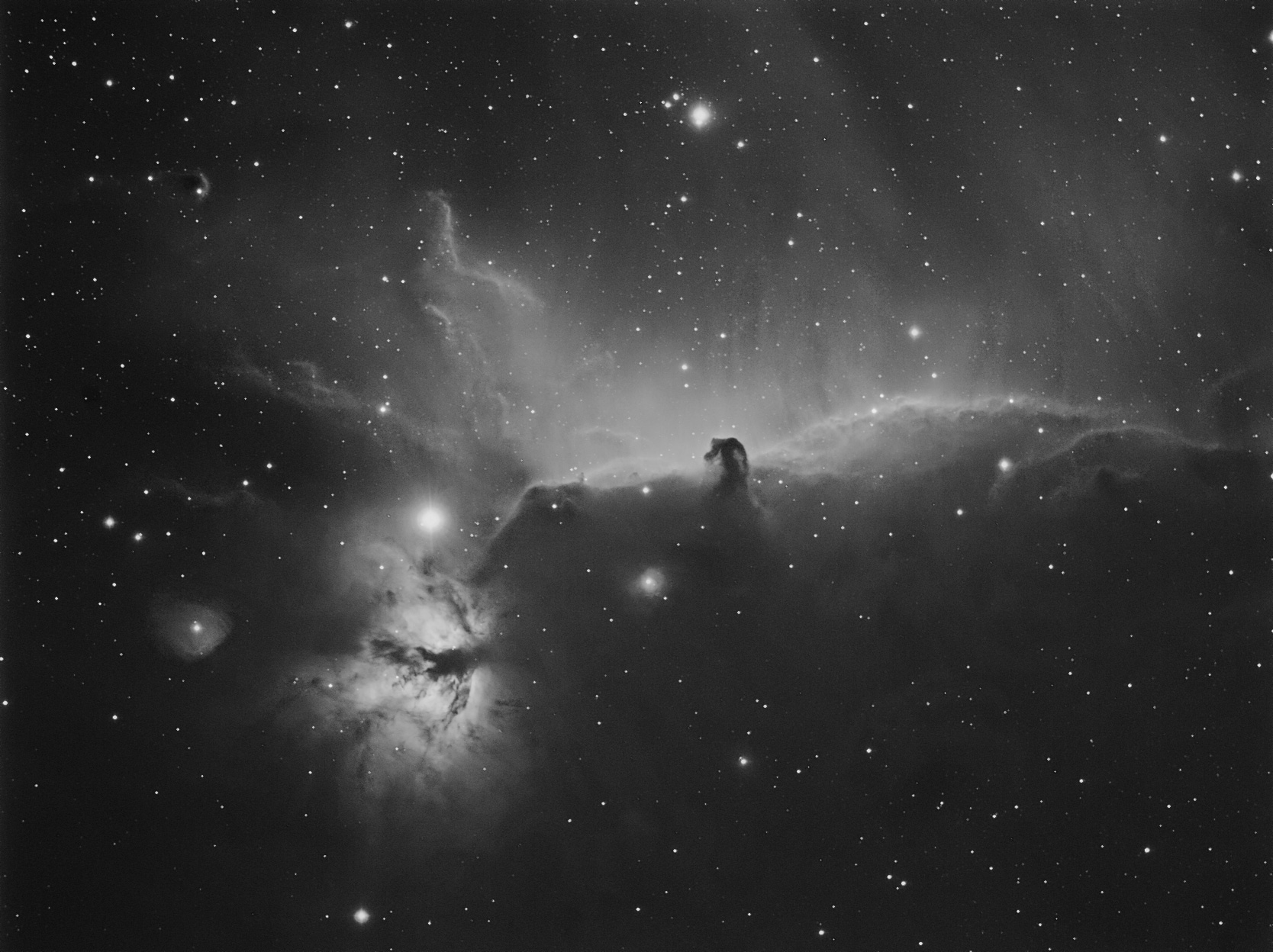
Horse head and Flame Nebulae with SVR90T and H-Alpha Filter
Posted in Uncategorized on January 30, 2011
Date: 01.23.2011 (last quarter moon)
Location: San Bruno, CA
Telescope: Stellarvue SVR 90T with Televue x0.8 reducer on Takahashi NJP-Z Mount
Camera: Qhy9 CCD with Astronomik HAlpha 12nm Filter
This is a stacking of 11 exposures of 8minutes. Even with the short focal ration (f/d 5.6) obtained with the televue reducer, I had to apply 2×2 Binning and take a fair amount of exposure to get details in the Nebula.
The H-Alpha filter does wonder to combat light pollution, even though the FWHM of this filter is not very narrow (12 nanometers).
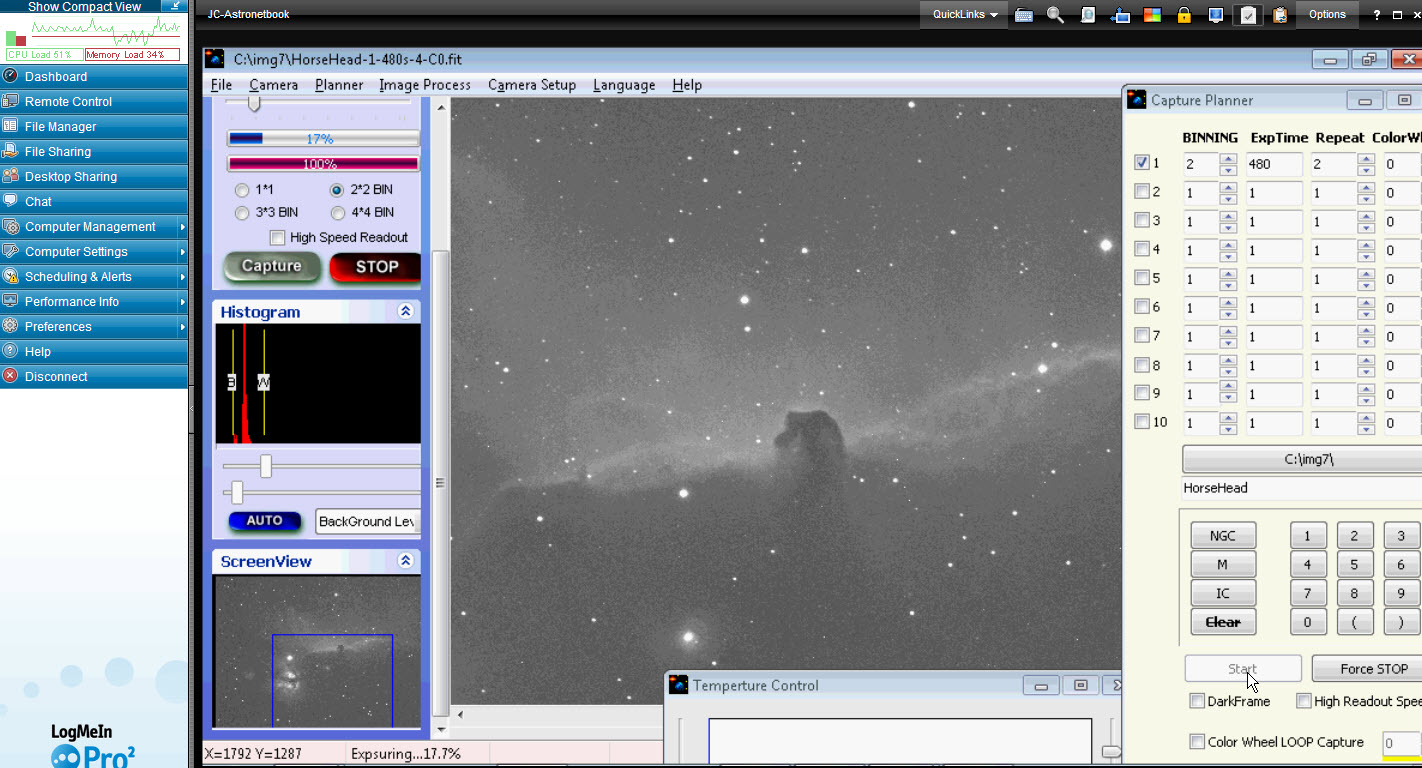
To capture this picture, I used the software Logme in to monitor the imaging session from the comfort of my living room…
Configuration:
- Imaging setting outside, connected to my Toshiba Netbook, accessing the Network from a Wireless connexion. The Netbook controls the Qhy9 camera, the Orion autoguider, and the Takahashi NJP-Z mount (Ascom driver).
- My Laptop, in the living room, allowing remote access to the Netbook using the LogmeIn software.
With long imaging session, getting remote access allows me to check if nothing goes wrong [ issue with tracking, clouds, etc] – without having to check every 20 minutes outside!
Here is a screenshot of the log me in screen with remote access to the Netbook controlling the imaging set up:
 Astrophotography in Urban Environment
