jmeriaux
This user hasn't shared any biographical information
Homepage: http://ngc1976.org
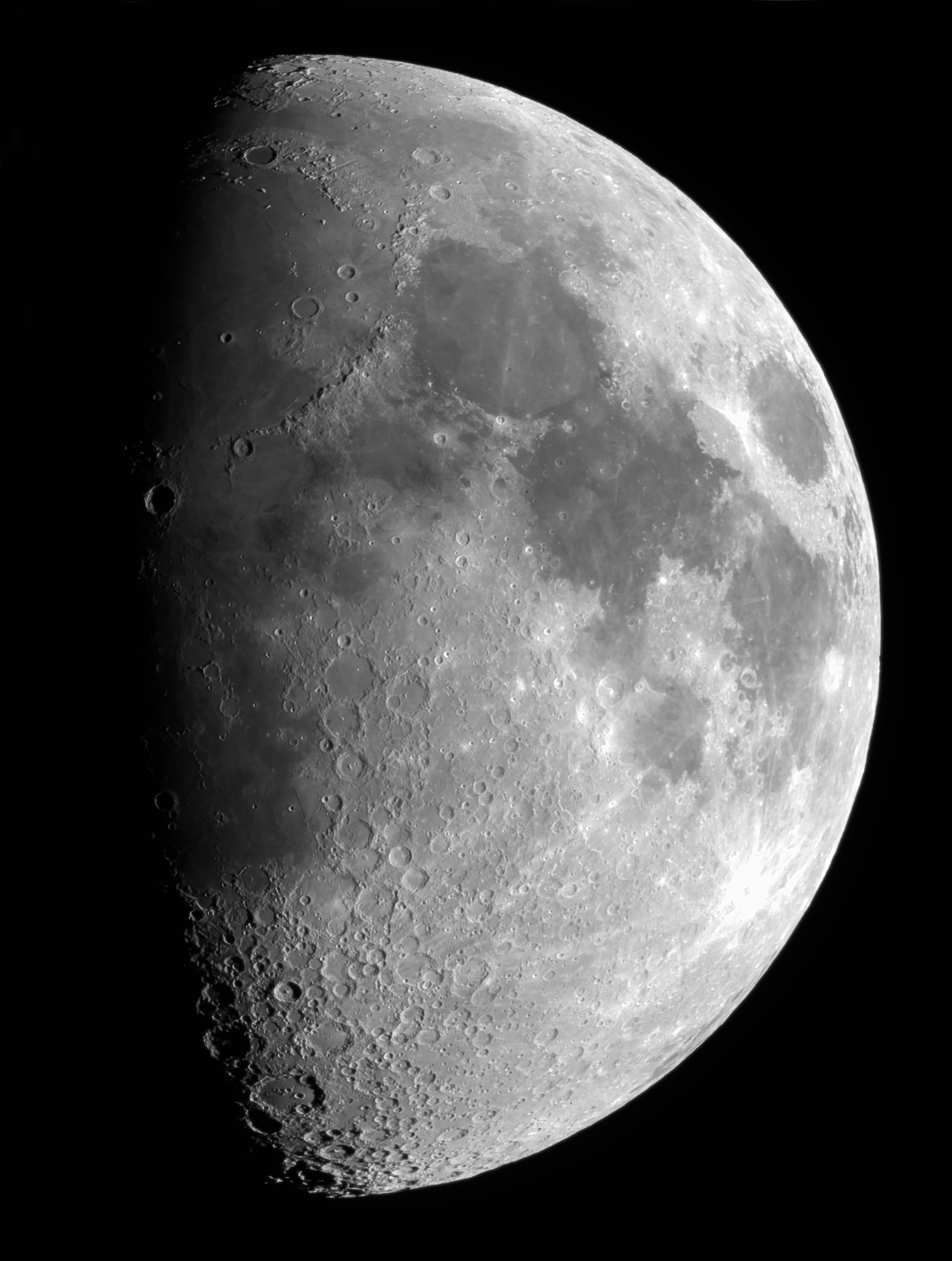
Moon First Quarter – December 2025
Posted in Moon on February 16, 2026
This is a Composite of 3 images taken with my Rumak Telescope iOptron 150 mm. Camera ZWO ASI 432MM with 500 frames combined using AutoStakkert for each image. Image was taken on the 29 December 2025 at 02h51 UTC.
North America & Pelican Nebulas
Posted in Astrophotography, Deep sky objects on October 7, 2024
ZWO Redcat 70mm with Radian quad-band filter and MC 2600 Asi Camera on 2nd of September 2024 – Concord CA
- 26 light frame 40 sec
- 8 dark frame 40 sec
- 17 Bias
- 30 Flat frame 1 sec 2 sec 3 sec
- Bin 1×1
The stacking was done using the ZWO stacking software and additional processing was done with PixInsights.
Sun 1st of September 2024
Posted in Sun on October 5, 2024
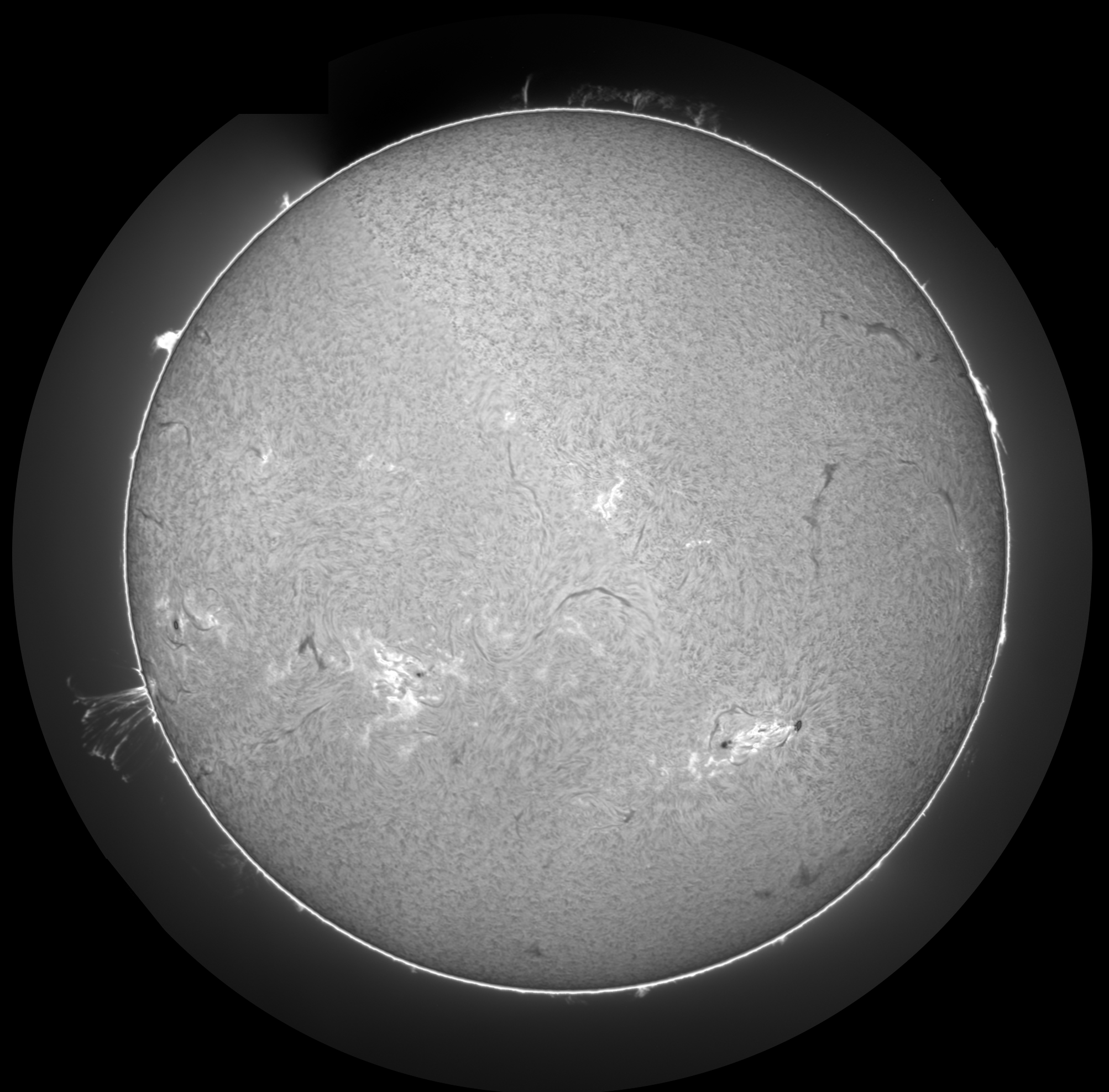
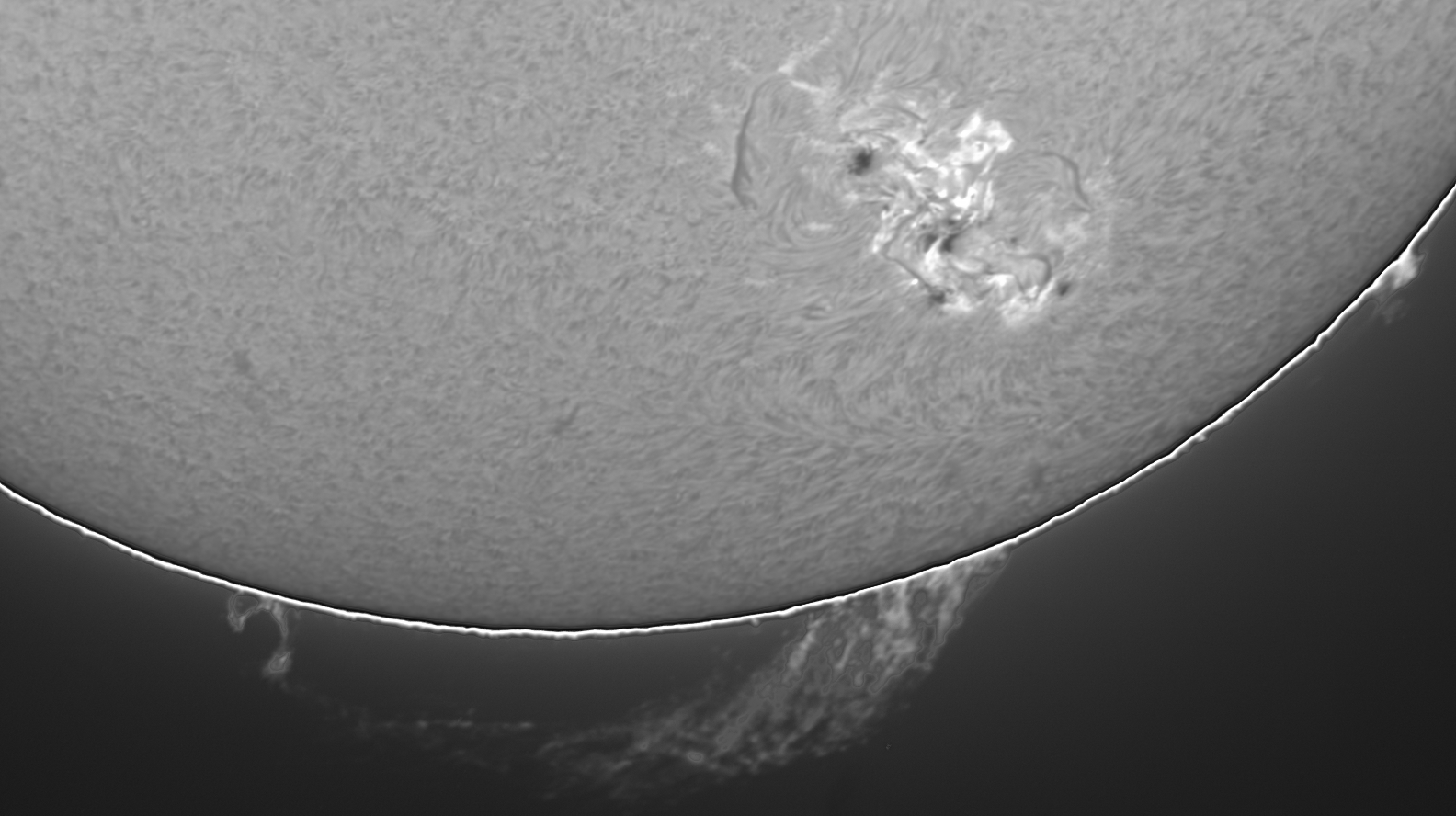
Another day of strong solar activity. This is captured in H-Alpha using my William Optics 60mm Refractor, with a Daystar Quark Filter. This is a mosaic of 4 images made from 300 frames each. The Camera used was a ZWO ASI 432MM. Image was captured the 1st of September 2024 at 19h43 UTC from Concord, CA.
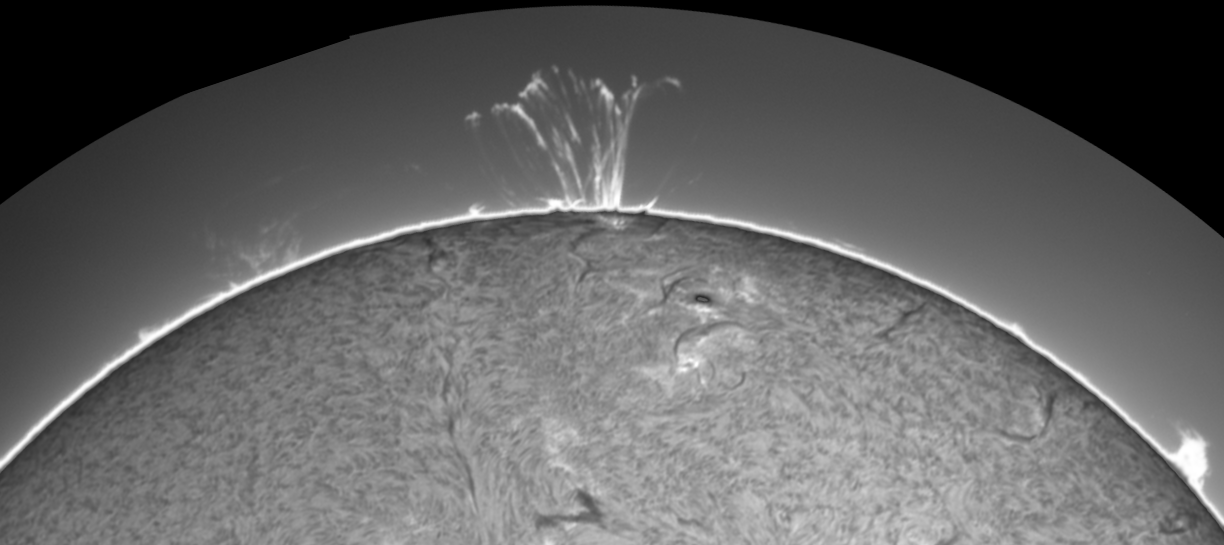
Below is a zoom on the large protuberance from the image taken with the William Optics 60mm refractor.
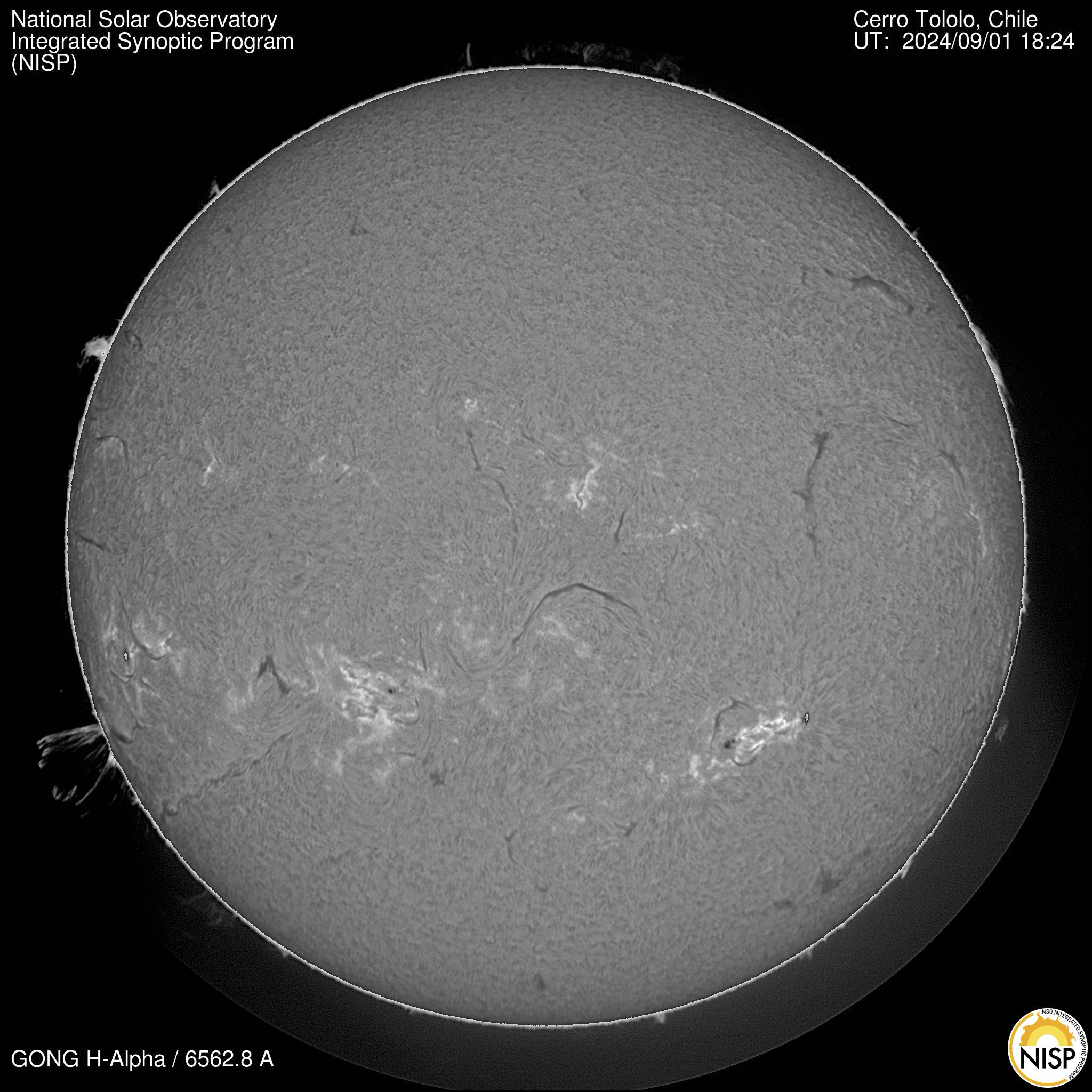
As a comparison, here is a picture of the Sun taken earlier the same day by the National Solar Observatory Integrated Synoptic Program (NISP).
Sun: 1st of June 2024
Posted in Home on June 1, 2024
The large Sun spot group I observed earlier in May is back now (Region 3697) and emitted flares today. There is a very large Solar filament across the south-east part of the disk. This is captured in H-Alpha using my William Optics 60mm Refractor, with a Daystar Quark Filter. This is a mosaic of 4 images made from 200 frames each. The Camera used was a ZWO ASI 432MM. This was taken on 6/1/2024 at 19h52 UTC from Concord, CA.

Below is a detail on Region 3697, with a reduced exposure time and an ZWO ASI 290MM camera. The Camera used was a ZWO ASI 432MM. This was taken on 6/1/2024 at 19h44 UTC from Concord, CA.

Sun on 5.11.2024 – Cont’d
Posted in Home, Sun, Uncategorized on May 27, 2024
I managed to capture the Sun this days in Visible Light, Calcium-K Wavelength, and H-Alpha wavelength.
This is the Sun captured in H-Alpha using my William Optics 60mm Refractor, with the Daystar Quark Filter. This is a mosaic of 4 images made from 700 frames each. The Sunspot group (Region 3664 – CR 2884) on the bottom right is very active and emitted large flares. This was taken on 5/11/2024 at 20h16 UTC from Concord, CA.

The same image at the same time, with a Stellarvue SVX 100mm, a Herschel Wedge and a Calcium K filter (Baader Calcium-K 8nm). I am using the same camera as above. The Faculae are more visible on the Sun’s surface. Don’t look at the Sun using such filter as the UV will harm your eyes. This was taken on 5/11/2024 at 19h57 UTC from Concord, CA.
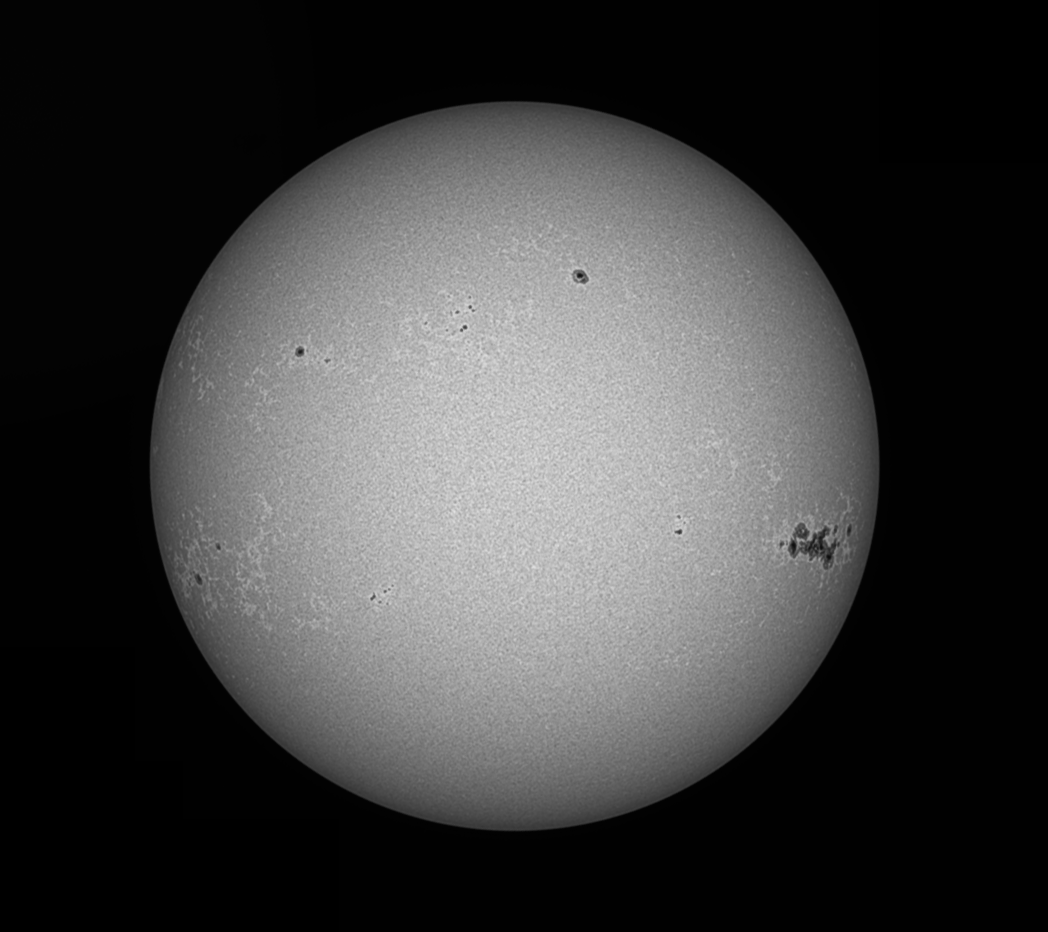
Last, this is the Sun in Visible light . This was taken on 5/11/2024 at 19h26 UTC from Concord, CA. This was taken on 5/11/2024 at 19h43 UTC from Concord, CA.

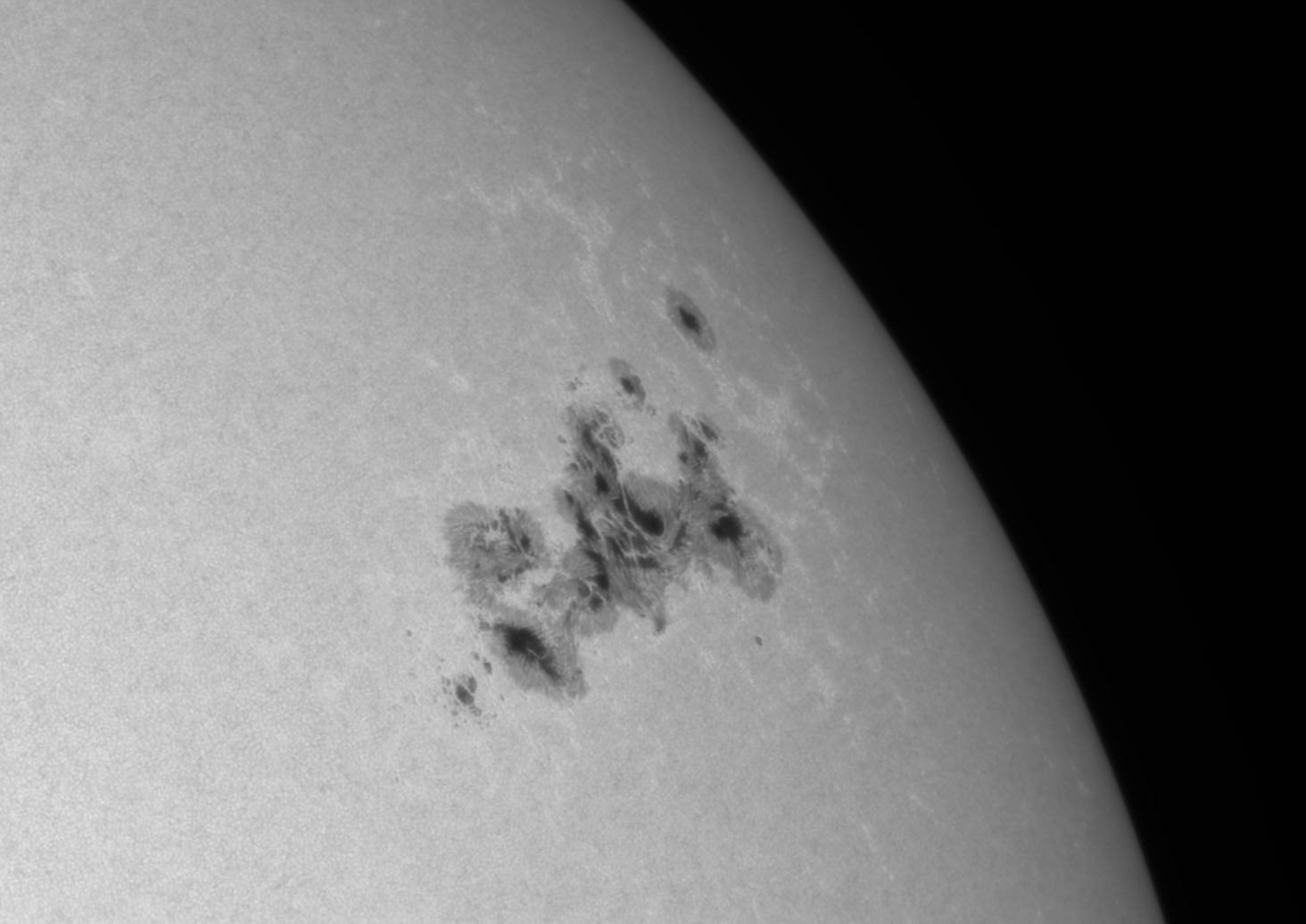
With the Sun activity almost at its maximum, the Solar spots are spectacular. The Sunspot group below (Region 3664 – CR 2884) is the same group on the bottom right in While Light.
The Instrument was a Stellarvue SVX 100mm with a 2x Barlow. The Camera is an ZWO camera ASI 290MM. This camera is quite sensitive, with Small pixel for high resolution planetary pictures.
Sun on 5.10.2024 with Daystar Filter
The sun was very active this may, with Aurora Borealis seen at very low latitude.
This picture is taken with a 60mm William Optics Telescope with a Chromosphere Daystar Quark Filter. The Chromosphere filter has a dial where the HAlpha wavelength can be tweaker. The visual views are impressive, but a small telescope at F/6 works best because the Daystart Filter has a 4x Barlow integrated, and is optimized for roughly a resulting focal ration of 25.
Visually, the best with this filter and this small Apo is a 25mm eyepiece, to view the entire solar disc.
This is a mosaic of 4 images made from 700 frames each. The Camera used was a ZWO ASI 432MM. Even with a relatively larger frame (17mm), combining multiple images for a complete view of the Sun is needed. This was taken on 5/10/2024 at 19h08 UTC from Concord, CA.
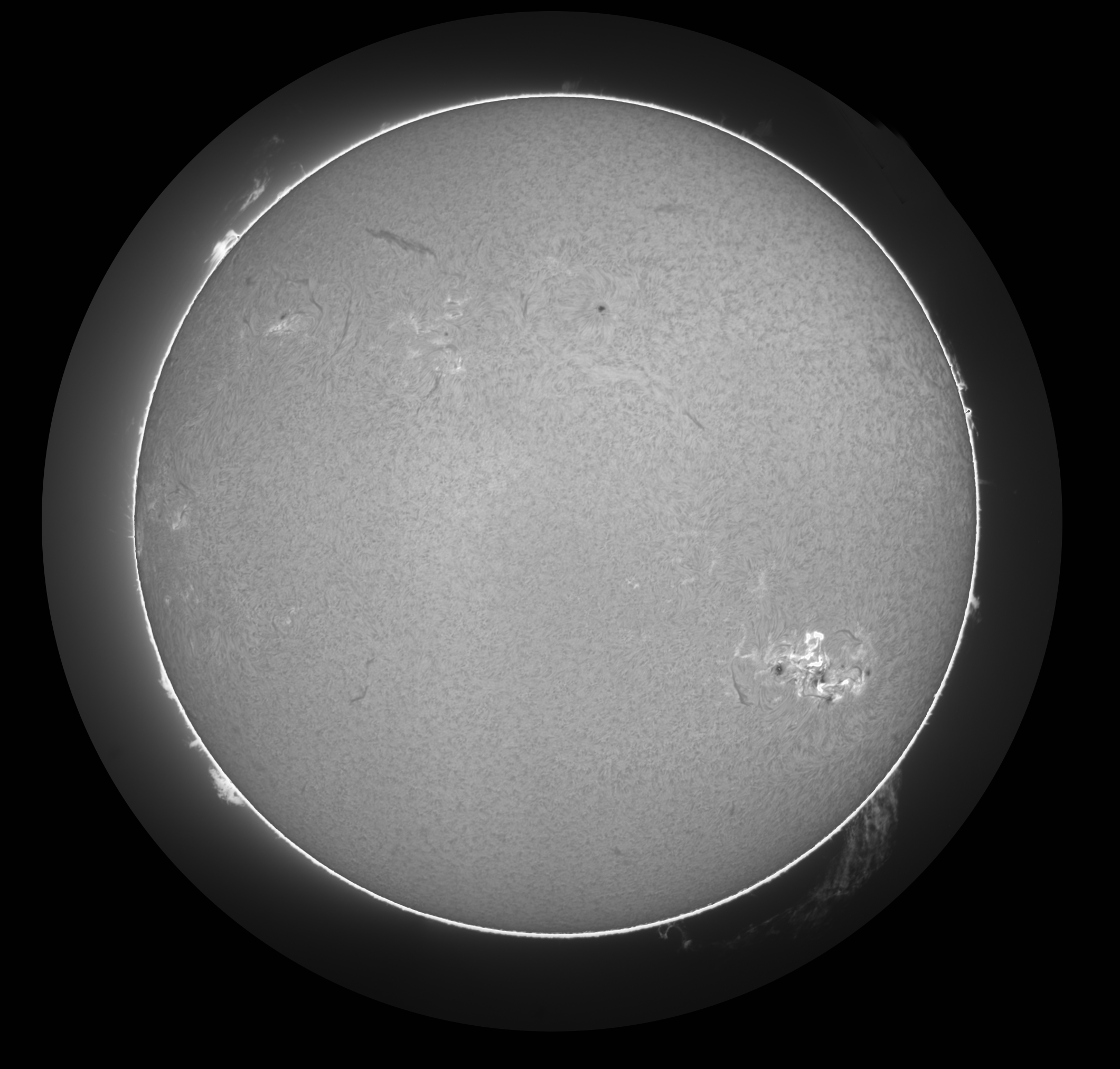
The large solar spot group on the bottom right is the region 3664 (Carrington Rotation 2284).
The details on region 3664 below was captured using the same settings, with a ZWO ASI 290 MM camera which has a much smaller pixel size (but also a much smaller sensor). This was taken on 5/10/2024 at 19h021 UTC from Concord, CA.
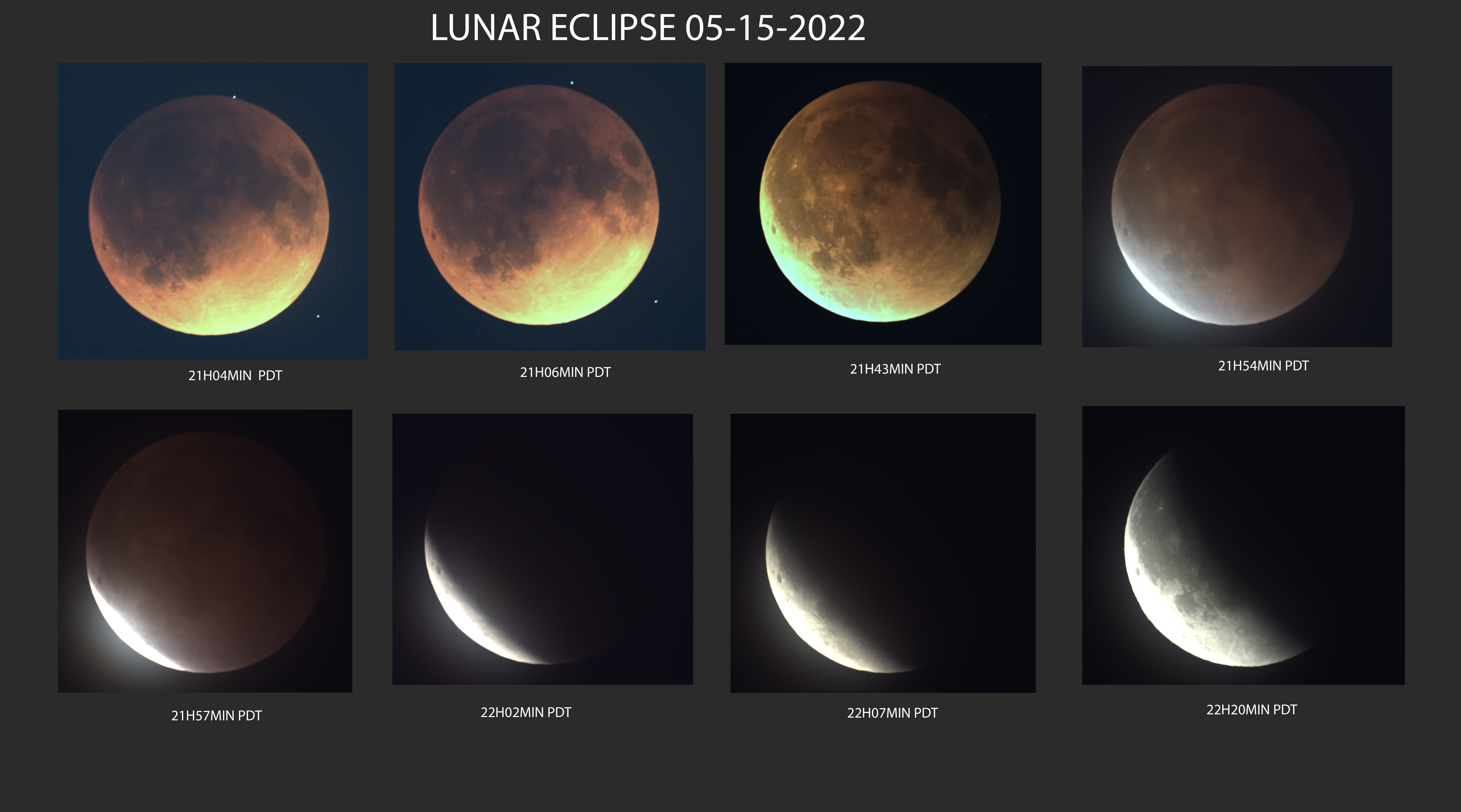
Total Lunar Eclipse – May 2022
Posted in Moon on September 16, 2023
These pictures were taken from the Oaks Park in Pleasant Hill, CA. The weather was pretty bad (windy & Cloudy) but managed to take few pictures of the total moon eclipse.
- Telescope: SVRT 90mm Stellarvue refractor
- Camera: ZWO ASI 290MC
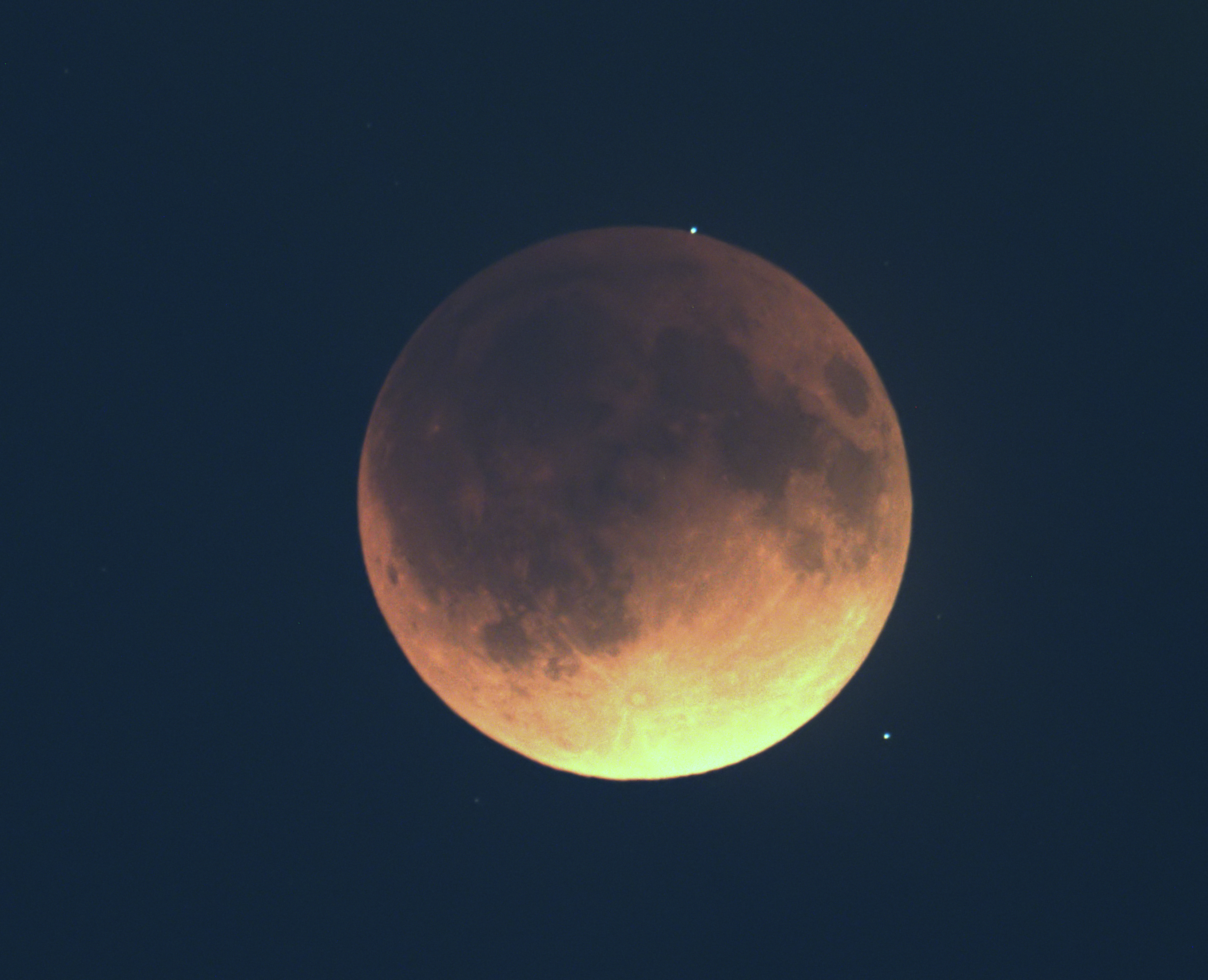
Below, the picture shows the star HR 5762 (5th magnitude in the constellation Libra) reappearing after its occultation by the moon. Picture was taken with the same setup at 4H04 GMT on 5/16/2023.
 Astrophotography in Urban Environment